




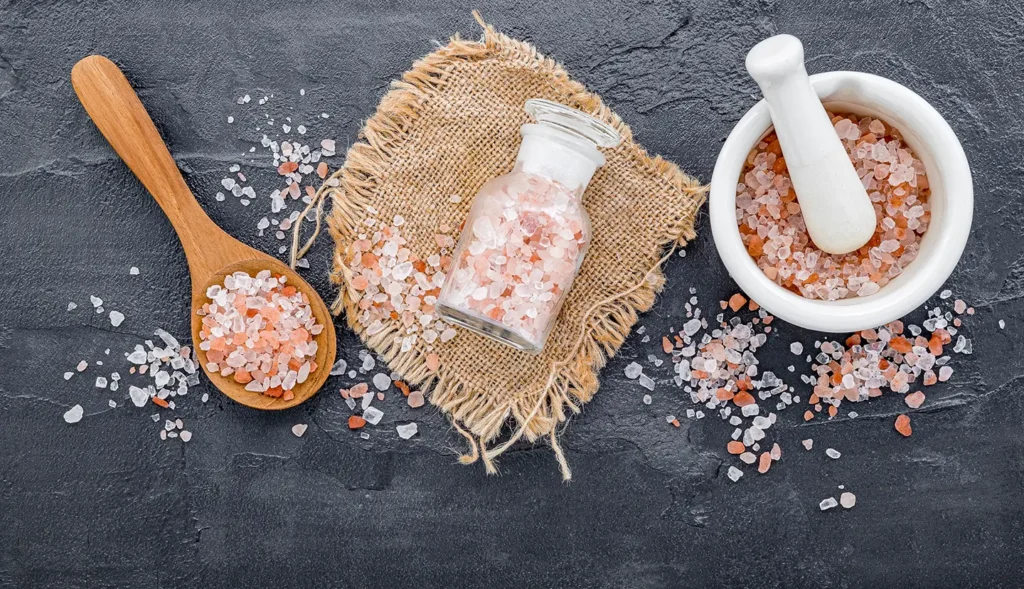
Table salt is a food product in the form of colourless crystals.
Sea salt contains impurities of other mineral salts, which makes it come in different shades: grey, brown, and pink. Rock salt is produced in both coarse and fine grinding. It is divided into the following grades according to its purity:
- extra;
- superior;
- first;
- second.
Table salt is used both pure and with various additives, such as iodised, nitrite, etc.
Salt is very important for the life of all mammals. If you consume insufficient salt, you may experience headaches, dizziness, weakness and nausea. But it is also harmful to overdo it with the amount of salt you eat. It can retain water in the body, increase blood pressure, and increase weight.
Products recommended as a substitute for salt
Seaweed
It contains salt, fibre and a lot of iodine. It is more commonly used in ready-to-eat form, but if you buy dried kelp and grind it to a powder, you can use it instead of salt in salads and side dishes. The dishes will be not only tasty but also healthy. Seaweed has a favourable effect on the digestive process.
Lemon
It’s common to add it to tea and cakes, but fish seasoned with lemon tastes simply delicious. And if you lightly sprinkle the finished salad with lemon juice, it’s hard to guess that it doesn’t contain salt. In addition, lemon contains a lot of vitamin C, which is useful for the body.
The vinegar used in the cooking process is different:
- dining room;
- apple
- wine
- malt
- rice;
- balsamic.
It can not only replace salt, but also enrich the taste of any dish. Depending on the type, vinegar is usually added to meat, vegetables, fish, first courses and side dishes. However, those suffering from gastrointestinal problems should not overuse this substitute for table salt.
Ginger and horseradish
They can replace not only salt but also hot spices. They are commonly used both fresh and dried as additives to sauces and seasonings.
Garlic
It is equally useful both fresh and dried in powder form. It has a pronounced taste and the same smell.
Spicy herbs
Fresh and dry herbs are used. They enrich the taste of the finished dish and distract attention from the lack of salt.
Dried vegetables
Vegetables rich in salt and vitamins, such as tomatoes, bell peppers and celery, retain their original taste and smell when used.
By following these tips, you can diversify your diet with not only tasty but also healthy food.