




Read this guide so you won’t feel awkward anymore when it comes to tipping.
How to Tip in Different Countries Around the World
Every successful traveler needs two things: a smile and respect for the culture of the country they’re visiting. Smiling is easy. Respect, on the other hand, requires you to pay close enough attention to learn about customs related to things like personal space, clothing, and tipping in different countries around the world.
Respect is paramount when you travel, and a courteous traveler respects both people and etiquette wherever they are. Just as it’s important to pack enough socks and underwear, it’s important to read up in advance on commonly accepted rules of politeness, since what’s considered polite in one culture may be offensive or confusing in another.
One way to show respect is knowing when, where, and how to tip. Of course, that’s easier said than done. Even knowing how much to tip in your own country can be confusing, and the rules vary widely from one country to another. Take, for example, how much to tip a hotel housekeeper. In Mexico, you’d leave 20 to 100 pesos – or $1 to $5 USD—per day, but in Scandinavia you wouldn’t tip hotel staff at all. If you’re not sure about tipping etiquette, don’t worry. We’ve put together a handy cheat sheet with tipping rules for countries around the world.
General tipping rules in different countries around the world
No matter where you travel, there are some general tipping rules:
- Leave tips in cash in the local currency;
- First, check your bill to make sure the tip has already been added;
- hand over money to people whenever possible, rather than leaving it on the table or passing it through third parties;
- If you are unsure about tipping norms, ask the concierge at your hotel or the owner of the hostel, Airbnb or house where you are staying.
- Contact your local tourist information centres. They may have brochures or guides on tipping in the area.
Tipping in America
The United States and Canada have similar tipping policies and are known for being generous tippers not only in restaurants, travel, and hotels, but across a wide range of other services. Tipping in Mexico is similar to the U.S., so you’ll need to leave 10 to 15 percent of the total bill at restaurants, hotels, and resorts.
But the situation can change significantly when you travel to Central and South America. Tipping isn’t considered a strict rule, though it’s happily accepted. When you do leave a tip, the norm is around 10 percent of the total bill.
Service workers in most countries prefer to receive tips in the local currency, but that’s not the case in Peru. There, workers prefer U.S. dollars. Mexicans accept tips in both dollars and pesos.
When evaluating the service, keep in mind that in Central and South American culture, things often happen much more slowly, and politeness and patience are valued more than speed.
Tipping in American Hotels
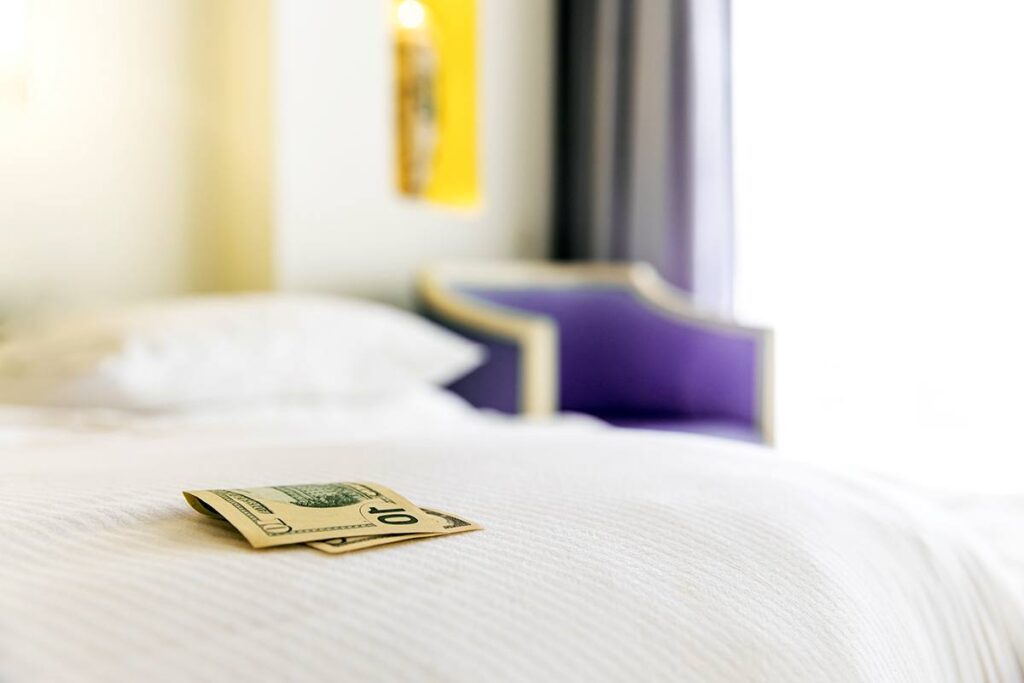
In the United States and Canada, tips for bellhops are $2 per bag, and for housekeepers, $3 to $5 per day. In addition, tip the concierge if you received special assistance, and tip for room service.
In Central and South America, the more luxurious your accommodations are, the larger the tips you’ll be expected to leave. For example, at an upscale resort in Mexico, you can expect to tip bellhops, valets, housekeepers, chefs, event coordinators, and other staff. Tips in places like these run from 15 to 20 percent. At less fancy properties, tips for bellhops are $1 per bag, and for housekeepers, $1 to $2 per day.
In Central and South America, there’s one more thing to keep in mind: In some countries, including Mexico, Colombia, Bolivia, and certain parts of Brazil, people may offer to keep an eye on your car while it’s parked to help ensure its safety. Be prepared to pay a fee and tip in cash.
Tipping at Restaurants in America
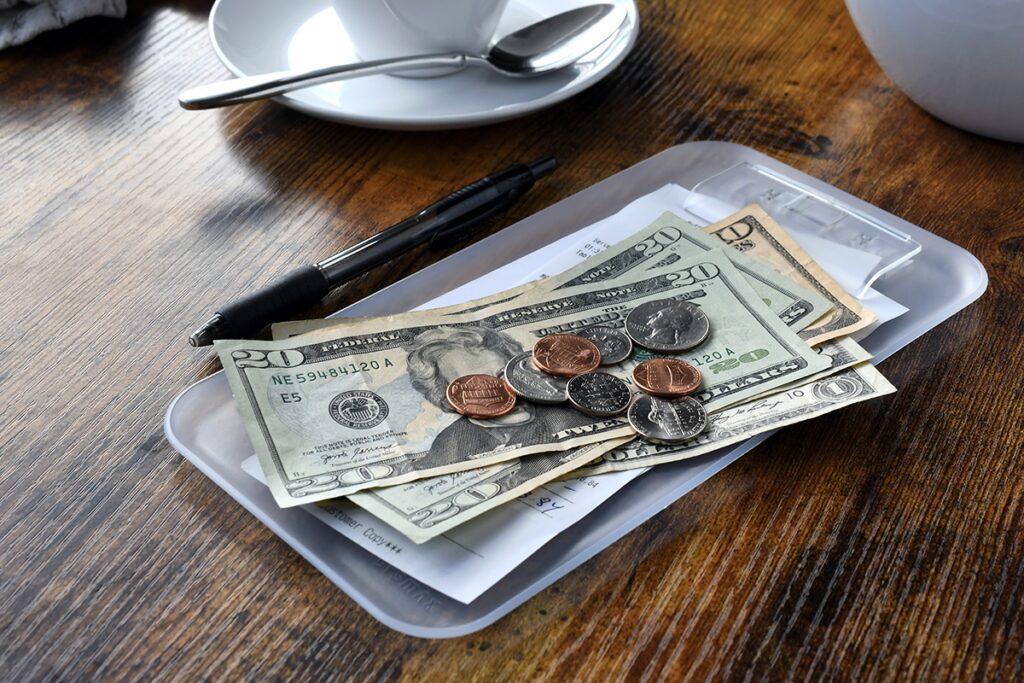
In most restaurants in the United States and Canada, a tip of 15 to 20 percent (or more) is expected. Tips are also expected at bars and coffee shops, and you’ll often see tip jars on the counter at other types of food establishments, such as ice cream shops.
If you’re dining in Argentina, Brazil, Colombia, Peru, Bolivia, Paraguay, Uruguay, or Chile, leave 10 percent of the bill if the service was good. If you’re in a tourist area, increase the tip to 15 percent.
First, check the bill—especially in Mexico, Nicaragua, and Argentina—since restaurants often add a tip automatically. If the tip isn’t included, you should still leave one, even if you don’t see a tip line on the bill. Hand it in cash directly to the server rather than leaving it on the table.
Suriname and French Guiana are exceptions to this rule—waiters don’t expect tips.
Tipping Tour Guides in America

In North America, tips for guides can vary by location, but generally they range from $10 to $25 per person per day. In popular tourist destinations, you can expect higher tips.
In South America, guides generally earn most of their money from tips, so it’s worth tipping generously. Plan to give $10 to $20 per person per day for a one-day tour. Add $5 to $10 for the tour bus driver. If your group is large, includes small children, or has special needs (for example, dietary issues), consider adding a few extra dollars per person. Brazilian culture dictates that guides should be tipped more generously—typically $20 to $45 per person per day.
If you’re joining a multi-day guided trek—like a trek across the Andes—tipping works differently. Talk to the tour company about what’s expected and how to tip. And if you really want to make sure the tour company knows how much you enjoyed the trip, consider writing a thank-you on a review site so other travelers know the guides are great.
Tipping Taxi Drivers in America
At the end of a taxi ride in the United States and Canada, give the driver an additional tip of 10 to 15 percent on top of the fare.
In Central and South America, it’s common to agree on the price of a taxi ride in advance—say, $30 for a trip to the airport. You may even be asked to pay upfront. In that case, don’t worry about leaving an additional tip. However, if the driver uses a meter, round the tip up to the next whole dollar.
Tipping in Europe
Tipping culture in Europe is more relaxed than, for example, in the United States, so there’s no need to know every rule. Whether you tip in Spain, in France, or in one of the other 44 European countries, it’s considered a nice gesture, but not always necessary. And in many situations, it’s already included in the price. When tips are given, they’re usually around 10 to 15 percent.
When calculating tips, keep in mind that European service staff—restaurant workers in particular—may be less attentive than people in the West are used to. Instead of checking in on how you’re doing, they’ll often wait until you signal that you need something. This is especially true in Italy. It’s something to remember when considering your own table manners—don’t get combative just because the service isn’t as “active.”
Tipping in European Hotels
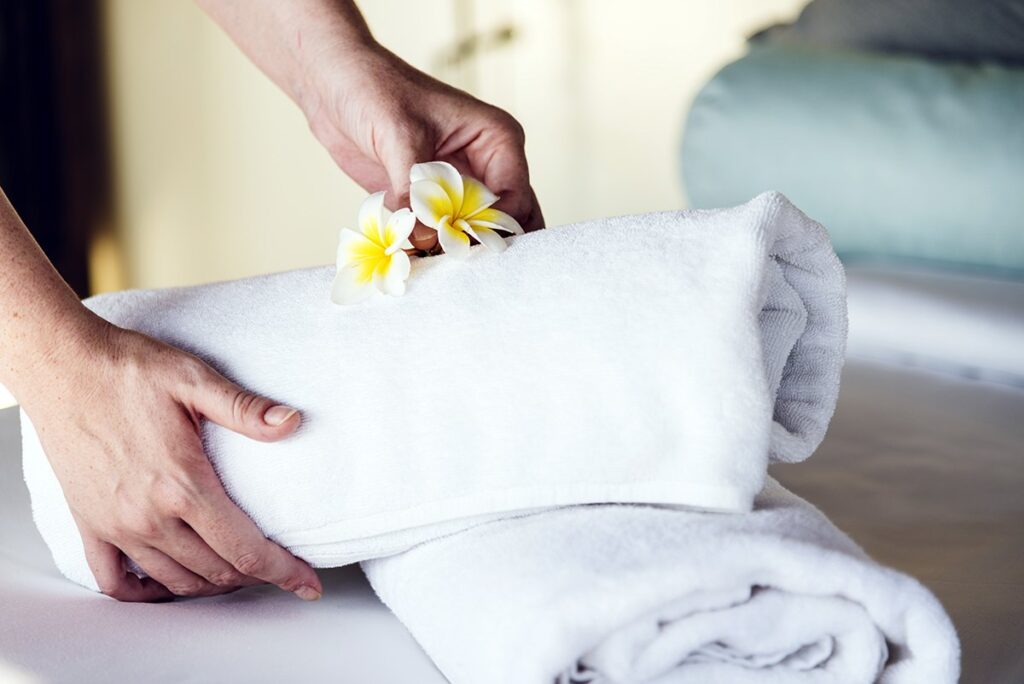
Tipping amounts vary by country, city size, and type of accommodation, but it’s generally considered polite to offer a small tip to the bellhop carrying your luggage—for example, $1 per bag in the local currency. Similarly, feel free to leave $1–$2 per day in the local currency for housekeeping.
If you’re staying in a hostel, tips generally aren’t expected, but you can offer a small cash tip if someone went above and beyond to help you—for example, by keeping an eye on your valuables or booking reservations for you.
Swiss federal law requires that all service charges be included in posted prices, which means you don’t need to tip service workers, including hotel staff. That said, they won’t turn down a tip you give the housekeeping staff at the end of your stay.
Some Eastern European countries (former Soviet states) are an exception. There, hotel workers are often underpaid and rely on generous tips.
Tipping in European Restaurants
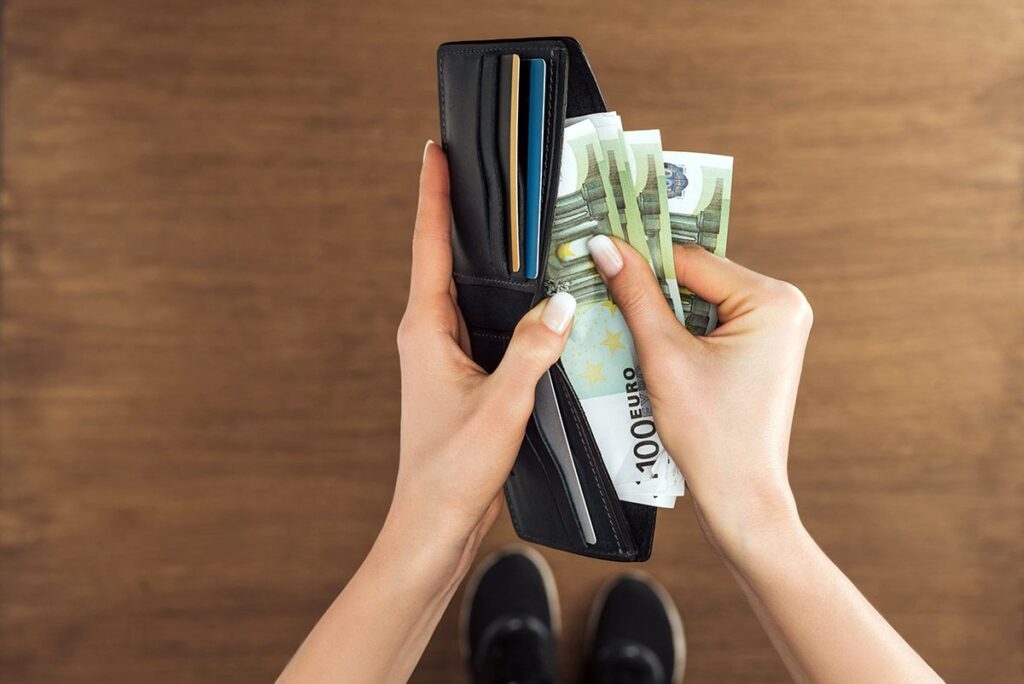
In Europe, restaurant tips are generally 5 to 10 percent of the total bill. Very often, a service charge is already included in the bill, so check before leaving extra money. Even in those countries (including Northern and Eastern European countries) where there’s no “tip” line, it’s typically already built into food prices.
If you decide to leave a small extra tip, give it to the server in cash rather than leaving it on the table. If you’re in Germany, round it to a whole number and give the server bills, not coins.
The same Swiss tipping rules for hotels also apply to restaurants. In other words, there’s no need to leave an additional tip. Similarly, waitstaff in Belgium and Denmark don’t expect tips, but most staff won’t turn down a small gratuity if it’s offered.
Iceland is a major exception to this rule. There’s a strong culture of not tipping here, and restaurant staff are paid well. In fact, you most likely won’t even see a tip line on the credit card receipt.
Tipping European Guides
If you’re traveling with a tour company, it’s customary to tip 10 to 20 percent to the tour organizer at the end of the trip. But if you’re taking a day trip or meeting with a private guide, tip $2 to $5 per person (or 10 to 20 percent for the group) at the end of the tour.
Keep one thing in mind: You’re expected to pay and tip guides and drivers separately. However, tipping isn’t required for the talks given by impromptu guides, who often stand near popular tourist attractions. They’ll often ask for money at the end, and if you appreciated the information, give a dollar or two.
Tipping European Taxi Drivers
How much you tip a taxi driver in Europe depends on what, exactly, they did for you. Instead of leaving a formal tip, just round up the fare. For a short ride, round up to the nearest euro or local currency unit. For longer rides, round up the fare to the nearest ten—for example, for an €82 fare, give €90. It’s not an etiquette mistake not to tip more, but it’s nice to add a few extra dollars if the driver went out of their way to help you—for instance, by carrying your bags or providing extra assistance at the airport.
Tipping in Asia

In Asia there are 48 countries, and attitudes toward tipping vary widely. Chinese tipping culture is different from Japanese, which is completely different from Thailand. The best rule is to check a guidebook for the specific Asian country you’re traveling to. Keep in mind that “respect” is a core principle of social interaction in most Asian cultures, and one way to show it is to understand the local tipping culture.
Overall, India, Indonesia, the Philippines, and Thailand have adopted Western tipping standards, so tipping expectations will be similar to the U.S., though the amount is generally lower. In China, Mongolia, Laos, and Taiwan, on the other hand, tips are not expected. And in South Korea, Nepal, and Japan, tipping may be seen as an insult, since people there consider their standards high and service workers well paid. (If you truly want to tip a service worker for exceptional service, consider putting it in a nice envelope and presenting it as a “gift” at the end of your stay).
The tipping process can also differ from country to country. For example, instead of shaking hands, people in Thailand greet one another with their palms pressed together at chest level—this greeting is called a “wai,” Whatley says. So don’t try to tip an employee via a handshake, since that’s seen as disrespectful, she adds.
Tipping in Asian Hotels
In most Asian countries, the nicer the hotel, the more likely you are to be expected to tip. That said, tips are generally given only to bellhops and sometimes housekeepers, and they’re relatively small. In luxury hotels, expect to tip the doorman a few dollars and leave the equivalent of $2 to $5 in local currency per day for housekeeping.
In pricier places like Hong Kong and Indonesia, a service charge is usually included in the bill, so check before leaving extra money. Chinese culture takes pride in the fact that tips aren’t expected, and service workers don’t ask for them. However, they usually won’t refuse them if offered. The exception is Japan, where tipping is considered rude, and they may even give it back to you.
Tipping in Asian Restaurants
If tipping is expected at an Asian restaurant, it will most likely be added to the bill before you receive it. After that, no additional tip is expected. Hong Kong, Indonesia, Thailand, Malaysia, and the Philippines usually include gratuity in the bill. Whether a tip is added to the bill or not, it’s considered good etiquette to round the total up to the next whole number when paying.
In Singapore, there’s a split tipping culture: locals don’t tip, but tourists and foreigners are expected not just to tip, but to tip well—usually 15 to 20 percent of the total bill. This is becoming increasingly common. So if you’re vacationing in one of these areas, be sure to avoid the rude restaurant habit of skipping the tip, because you’re in a foreign country.
In South Korea, small tips—5 percent or a few dollars—are expected at Western-style restaurants, but you don’t need to tip at Korean restaurants.
Tipping Asian Tour Guides
Because they spend most of their time with tourists, guides and drivers in Asia are used to receiving tips. Most guides won’t ask for a tip directly, but they’ll accept one if it’s offered. Depending on the length of the tour, offer a few dollars per person, or 10–15 percent of the total cost. Tip in cash at the end of the tour. Expect to tip guides and drivers separately.
Tours are the only exception to Japan’s no-tipping policy, and most guides will accept a small gratuity if you offer it.
Tipping Asian Taxi Drivers
Instead of leaving an official tip, offer to round up the fare. For a short ride, round up to the nearest dollar or the equivalent in local currency. For longer rides, round up the fare to the nearest five or ten. How much you tip a taxi driver in Asia depends on what they did for you. Did the driver go above and beyond, help you carry your bags, or provide extra assistance at the airport? Add a few more dollars to the total.
In Hong Kong, Thailand, Singapore, and the Philippines (some of the most beautiful countries in the world), drivers will often round up the fare automatically themselves. If they show you the meter, round up the amount yourself.
This doesn’t apply to Japanese or Chinese drivers. They generally don’t expect or accept tips, and if you round up, they’ll give you back the exact amount.
Tipping in the Middle East

No matter whether you’re headed to one of the most popular tourist destinations in the Middle East or setting out on a more off-the-beaten-path journey, tipping matters. As in the West, tips are expected and appreciated in most Middle Eastern countries, including the United Arab Emirates (UAE), Saudi Arabia, Qatar, Jordan, and Israel. Yes, federal law in Dubai requires an automatic 10 percent tip to be added to every service bill. Kuwait has the highest tipping standards, on par with the United States. In Iran and Iraq, tipping isn’t customary, but service workers will accept it if it’s offered.
Overall, Middle Eastern countries follow cultural rules more strictly than Westerners may be used to. To show respect (and make sure your trip goes smoothly), it’s important to understand tipping protocols. If you’re not sure what the rules are in a particular country, research what’s expected—don’t try to wing it.
Tipping in Middle Eastern Hotels
In hotels in popular tourist destinations such as Israel and Jordan, tips are expected, similar to what you’d pay in the West. Tips for bellhops range from $1 to $2 per bag, and for housekeeping from $2 to $3 per day in the local currency. It’s also considered good manners to tip concierges who go above and beyond for you—for example, booking a table at a popular restaurant or tickets to a show.
In Dubai, tips are included in the bill, and there’s no need to leave anything extra. Elsewhere, including the UAE and Saudi Arabia, tips for porters and housekeepers are about $1 per bag and $1 to $2 per day.
Tipping in Middle Eastern Restaurants
Tipping 10 to 15 percent of the bill is standard practice in the UAE, Saudi Arabia, Qatar, and Jordan. In Kuwait, you should tip a little more—about 15 to 20 percent of the bill. You may or may not see a tip line on the final bill or credit card receipt, but you should tip regardless.
In Israel and Jordan, check the bill before tipping; as a rule, the tip is already included. In Dubai, expect a 10 percent tip to be included in the bill, but feel free to offer a few extra dollars for exceptional service.
When tipping in the Middle East, be sure to hand cash to the server with your right hand. In this region of the world, it’s considered impolite to exchange money with your left hand.
In Muslim countries, it’s worth keeping in mind when Ramadan—the holy month of Islam—falls. Since devout Muslims will be fasting during the day, restaurants may have adjusted hours or menus, and it’s also appropriate to leave a little extra tip in the spirit of the holiday.
Tips for Middle Eastern Guides
Tour guides aren’t just nice to have. Sometimes they’re necessary to get into tourist attractions in the Middle East. They’ll also make sure you know the rules and customs of a given area, including dress codes and gender norms. So you should expect tips to be a bit higher—$20 to $30 per person per day for day tours. If you have a private driver, tip $10 to $15 per person. Use the local currency, in cash.
Israel and Jordan are the exception. There, guides expect slightly larger tips—$25 to $35—and you should tip the driver at least as much as the guide.
Tips for Middle Eastern taxi drivers
Etiquette rules for taking taxis in the Middle East are pretty easy to remember: Drivers appreciate tips of 10 to 15 percent of the fare, but for short trips it’s usually enough to round up to the next dollar. Drivers in Dubai don’t expect tips, but even there it’s worth rounding up.
Tipping in Africa

In Africa, there are 54 countries, and each one has its own culture, with its own rules about tipping. Tipping is customary and expected, but not mandatory, in almost every African country. Generally, you’re expected to tip 10 to 15 percent, with the exception of Nigeria, Sudan, South Sudan, Tanzania, and Ghana, where tips average 10 percent or less.
Note that there are many places in Africa that don’t accept credit cards, so be prepared to exchange cash for the local currency after you arrive.
Tipping in African Hotels
Hotel concierges, especially in Egypt, South Africa, and Morocco, can make or break your trip. They often know everyone and everything, and can connect you with anything you need. Tip them $20 or more at the start of your trip to ensure good service, then give an additional tip at the end of your stay. Tip other hotel staff smaller amounts: $1 per bag for porters and $1–$2 per day for housekeeping.
Tipping in African Restaurants
Dining establishments in South Africa, Egypt, and Morocco often add a 10 percent tip to the bill, especially in popular tourist areas. Check the bill before adding a tip, but don’t hesitate to leave an additional 5 percent for good service.
In other countries, the general rule is to tip 10 to 15 percent in the local currency. Be sure to hand the money directly to the server.
In many places in Africa, people may approach you and offer to do small favors for you—for example, to guide you to the bus station, carry or bring something for you, or offer you a map. Offer a small cash tip to people who provide a service, even if it seems a bit unconventional.
Tipping African Guides
In Africa, there are two main types of guides: day guides for popular tourist sites and safari guides. In both cases, the price for a tour or safari can be negotiated in advance, including tips. If tips are not yet included in the price, tip your guide $10 to $20 per person per day.
If you’re heading out on safari— a favorite vacation choice in Serengeti National Park, one of Africa’s most popular tourist destinations—ask in advance how the company would like you to handle tipping. Typically, you tip at the end of the safari, as a single lump sum. Many safari companies have a tip box in the main lodge, but you can also hand it to the manager, who will then distribute it among the staff. Or you can give cash directly to individual employees, if you prefer.
So how much should you tip safari guides? Tips are usually higher than for day guides, but they vary depending on the type and length of the trip, as well as the services provided.
Tipping African Taxi Drivers
In most places on the continent, it’s enough to round the fare up to the next dollar equivalent, but if you’re in a popular tourist spot—like near the pyramids in Egypt—tip the driver 10 to 15 percent of the fare. Don’t worry about complicated calculations; just give the driver an appropriate amount in bills and ask them to keep the change.
Oceania

Oceania is a region that covers most of the islands of the Pacific Ocean, including Australia, New Zealand, Melanesia, Micronesia, and Polynesia. It’s a large, diverse region, but one thing that unites these countries is a very laid-back tipping culture. For the most part, tips aren’t expected, but if you feel like adding a little extra to the bill, it typically doesn’t exceed 10 percent.
In Australia and New Zealand, service workers earn a living wage, so they don’t rely on tips, but they will most likely accept them if you offer. In highly touristy areas, tipping is more common and ranges from 10 to 25 percent, depending on the service. In other areas, such as Fiji, tipping isn’t customary and isn’t encouraged.
Tipping in Oceania Hotels
Bellhops and housekeeping staff don’t expect tips, but if you received excellent service and want to show your appreciation, feel free to leave $2 per bag and $2 per day at the end of your stay. If the concierge was especially helpful, you can tip them as well. Tip amounts depend on the service and are left to your discretion.
Tipping in Oceania’s Restaurants
In these Pacific countries, it’s rare to see people tip in bars or regular restaurants, but if you’re dining at an upscale restaurant, leave a tip of about 10 percent of the bill. In Australia, a tip of 15 to 25 percent of the bill is expected when you’re dining in popular or busy places. If you see a tip jar on the counter, it’s polite to toss in some small change or a dollar.
Tips for Guides in Oceania
As in other service industries, guides generally don’t expect tips, but in Australia and New Zealand it’s considered polite to offer a small gratuity of about 5 percent of the total bill at the end of the tour. In Fiji, guides don’t expect tips and may not accept them.
If you’re taking part in a special tour—such as scuba diving or a trip into the outback—plan to tip your guide at the end of the tour. Twenty dollars, or 20 percent of the total bill (whichever amount is greater), is standard.
Tipping Taxi Drivers in Oceania
In Australia and New Zealand, it’s customary—for your convenience and the taxi driver’s—to round the fare to the nearest $5. In Fiji, simply pay whatever the driver charges.