


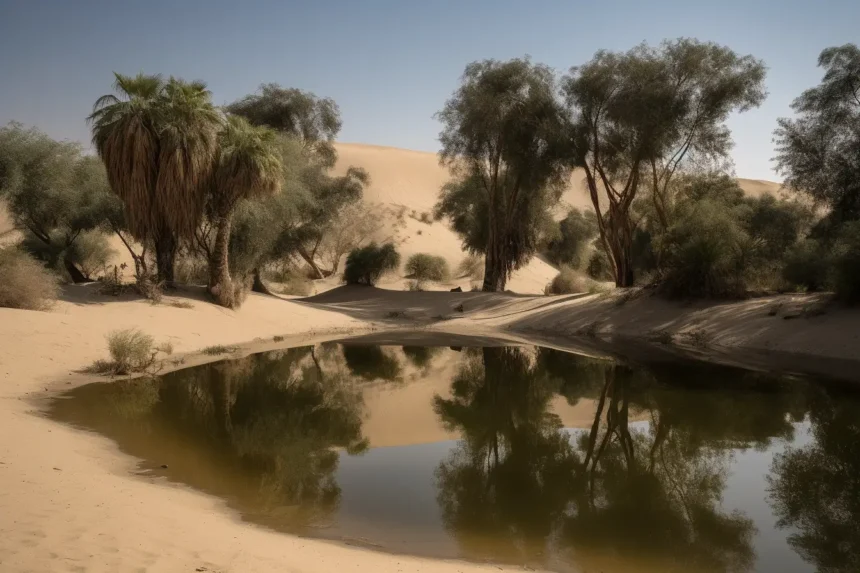
If you wander in the desert for a long time, eventually you might come across a paradise town called an oasis (the ancient name is “oaz”).
What is an oasis?
The word “oasis” in translation from the Coptic language, which derives from the ancient Egyptian name of the city of Oasis, means “place of residence”. An oasis is a small, limited area amid unfavorable environmental conditions that, unlike the surrounding area, is suitable for comfortable stay for a certain period of time. It is believed that an oasis is located near a natural water reservoir, isolated from other large masses of vegetation and water, a patch of vegetation in the desert. This statement is not 100% accurate; for example, an oasis in Antarctica is a small area free of snow and ice.
The role of oases in human history
In the endless sandy deserts, an oasis is a true refuge. After days of exhausting heat and monotonous landscape, it appears as a real salvation. Such magical corners of nature have been a serious reason for wars for thousands of years. Thus, to preserve a unique place, it is necessary to fight not only with the desert that surrounds it but also with other people.
Usually, many trade and transport routes intersect in oases. Oases were and are very attractive for caravans because here they can replenish food and water supplies and rest.
In the past, if someone managed to capture such a coveted piece of land, they became an influential person. Oases are not only a refuge for caravans traveling through the desert but also a permanent habitat for various animals.
How oases are formed in deserts
Oases are formed due to underground rivers or reservoirs, the water of which is capable of reaching the surface of the earth due to sufficient own pressure or with human assistance. Dense soil rocks help to preserve moisture in the reservoir, and birds living nearby contribute to the seeding of plant seeds. Gradually, under favorable conditions, the island grows and is sustained by rare rainfall.
What are Antarctic oases?
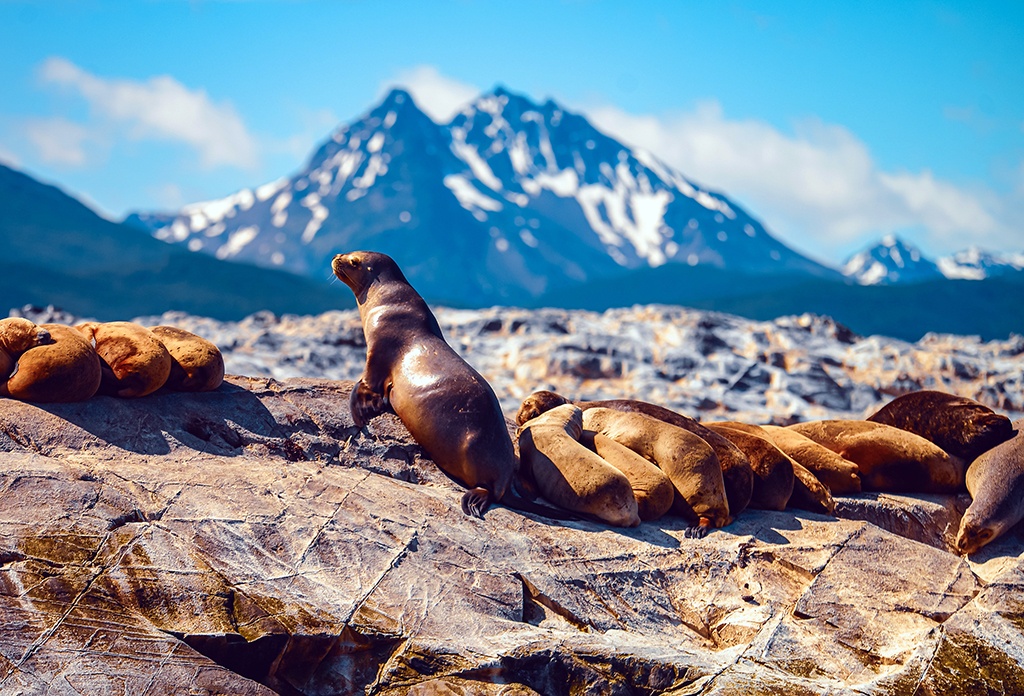
These are not water springs bubbling up from the ground, in the shade of palm trees, as we imagine sandy desert oases in tropical Africa or the Middle East.
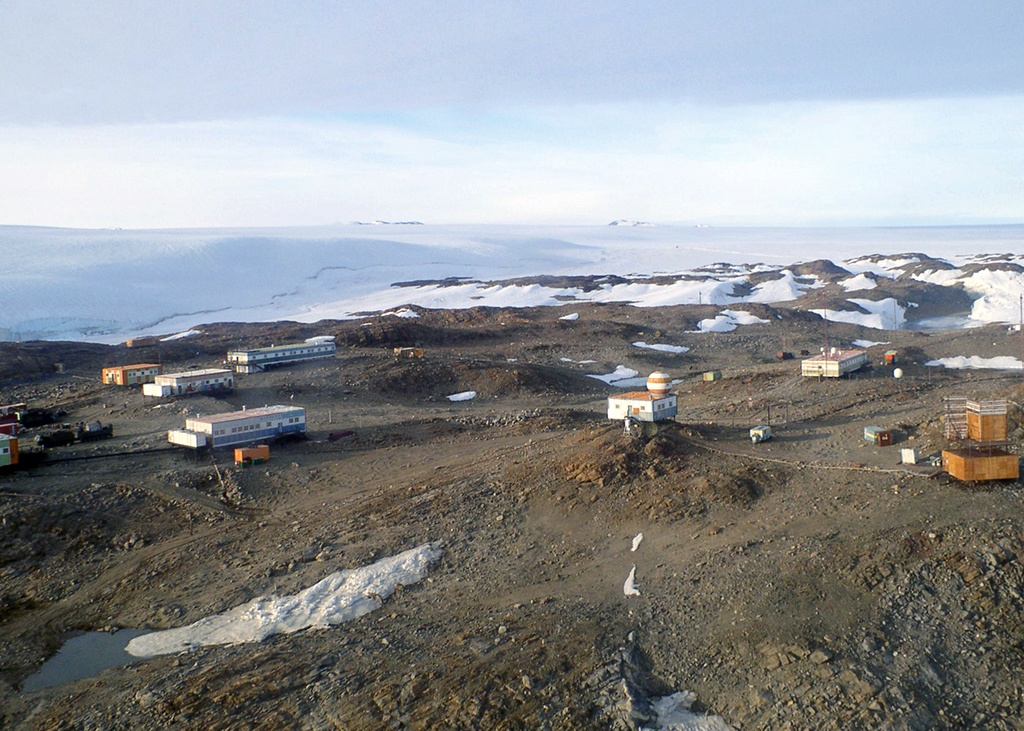
Antarctic oases are small areas of ice and snow-free rocks near the coast that stand out among the icy desert because of their colour – brown, greenish or reddish-brown. This is so unusual for the Antarctic landscape that Norwegian sailors who first saw this miracle on the shore of a small bay in Mackenzie Bay compared it to the picturesque Westfall province in their homeland.
The air temperature in Antarctic oases is several degrees higher (1-2 °C in winter and 5-6 °C in summer) than in the surrounding area. Similar to oases in the desert, Antarctic oases have water that does not freeze for at least part of the year, and many have salt and freshwater lakes and even lake systems.
The total area of land free of ice is only a fraction of one per cent of the entire territory of Antarctica – about 40,000 km2 in total, with the total area of the continent being 14 million km2.
How Antarctic oases are formed?
Previously, various hypotheses were put forward regarding the causes of Antarctic oases, such as underground hot springs or zones of increased radioactive decay.
Currently, the most common assumption is that the oases are caused by ice flowing around certain highland areas of land, or by the temporary retreat of a glacier. In both cases, the relatively dark exposed rocks, unlike ice, intensively absorb sunlight and can heat up to +20 °C and above (for example, the temperature on the rocks of Mirny station in January was around +30 °C).
Snow that falls on the rocks heated in summer melts quickly; due to the relatively high temperature of the rocks and dry winds blowing from the glaciers, moisture evaporates quickly and does not accumulate in the oasis. As a result, the air and soil remain dry. Humidity rarely exceeds 50%, and only in some places on the coast does it receive up to 700-1000 mm of annual precipitation.
In winter, the surface of the oases is covered with snow.
The most famous oases in the world
Below, we have compiled a list of the most common oases of the world around the globe.
Antarctic oases
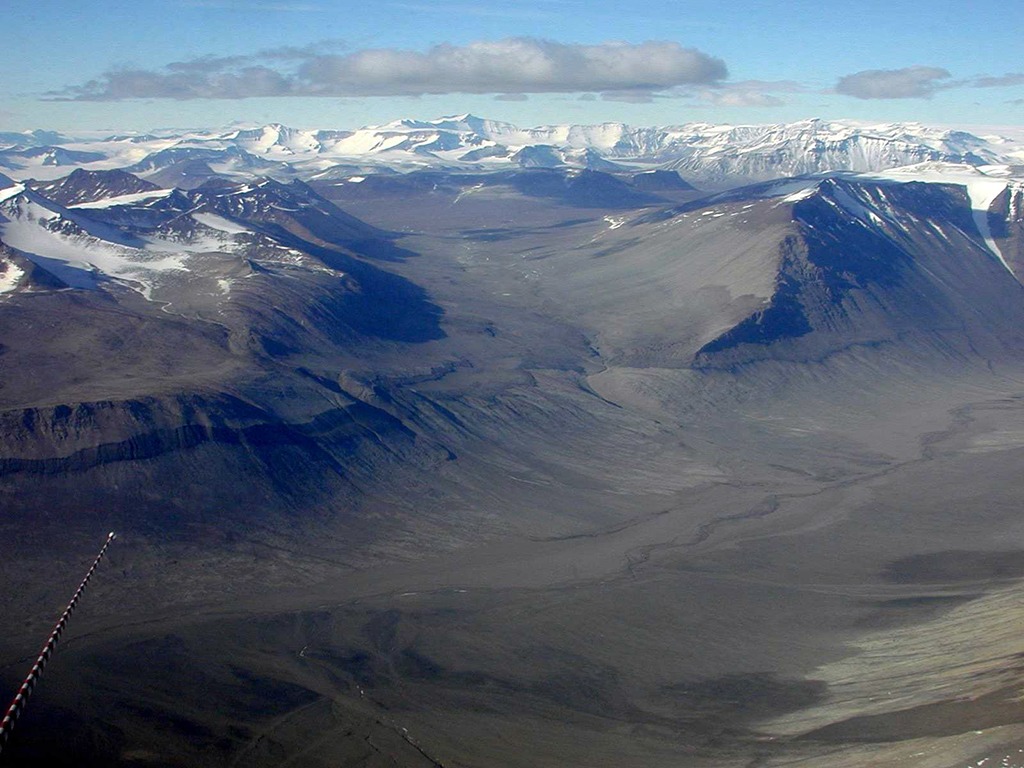
- At the beginning of the 20th century, the British expedition of Robert Scott discovered the first oasis in Antarctica, which was named Dry Valley.
- In 1939, a German expedition in the Queen Maud Land discovered an oasis with numerous freshwater lakes up to 30 metres deep, which was named after the pilot Schirmacher. The oasis is 25-30 km long and up to 3 km wide. The average annual temperature is -10 °C (with the average temperature on the continent ranging from -60 to -70 °C in winter and from -25° to -45 °C in summer). This climate is completely favourable for life. The only vegetation is mosses and lichens, and the only animals are penguins and some species of seabirds.
Oases of Africa
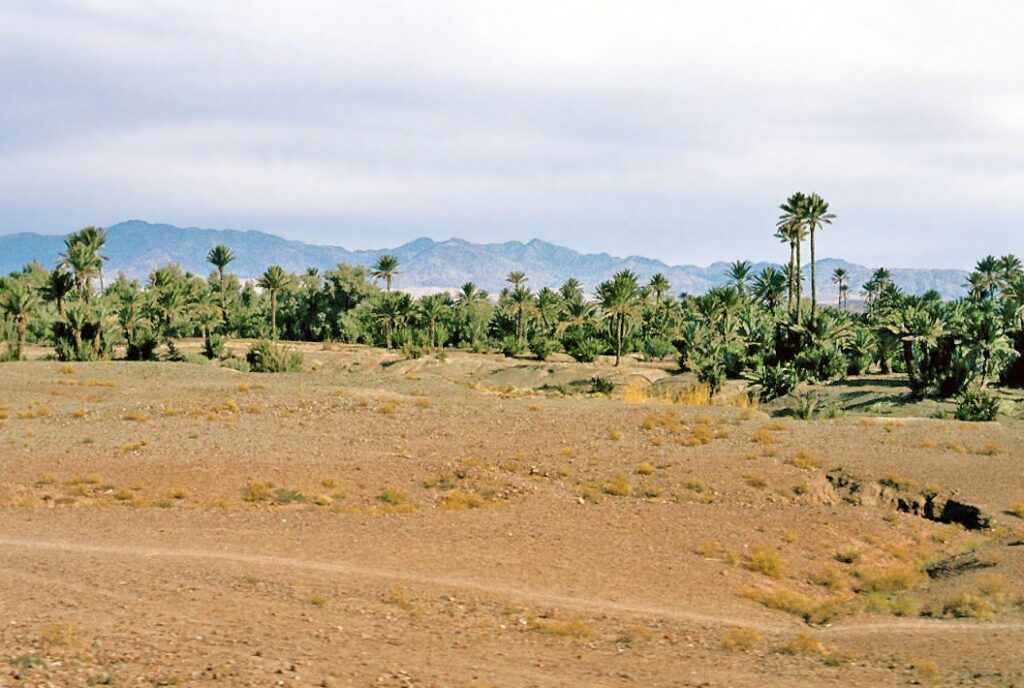
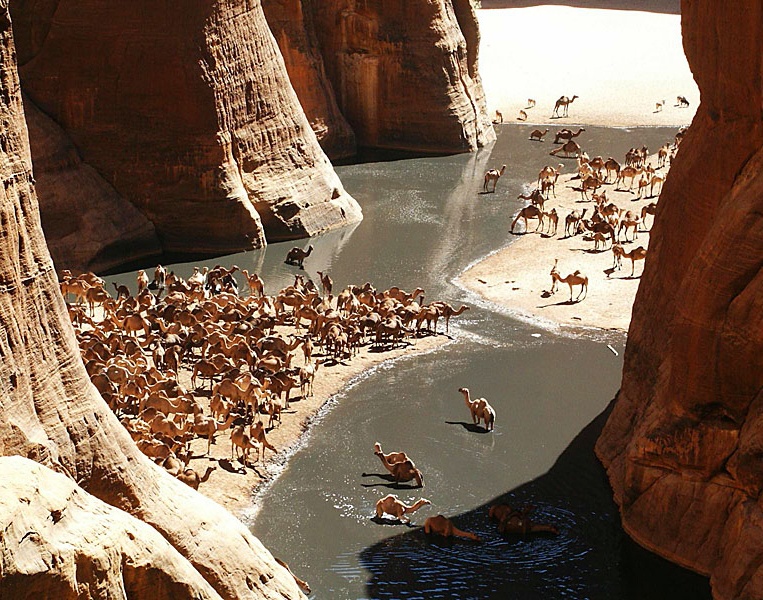
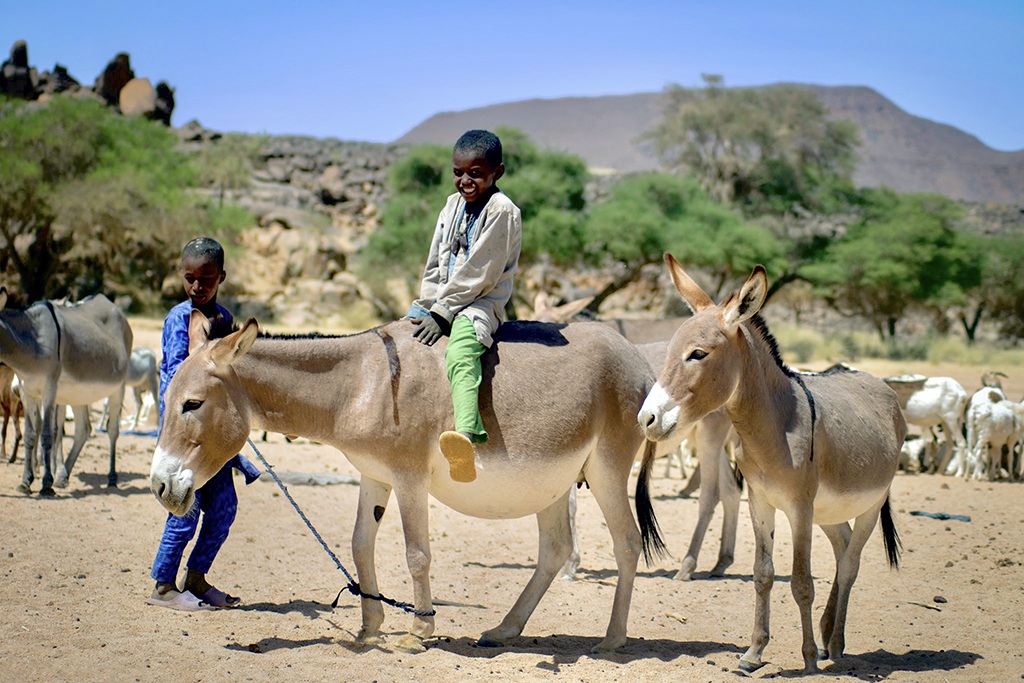
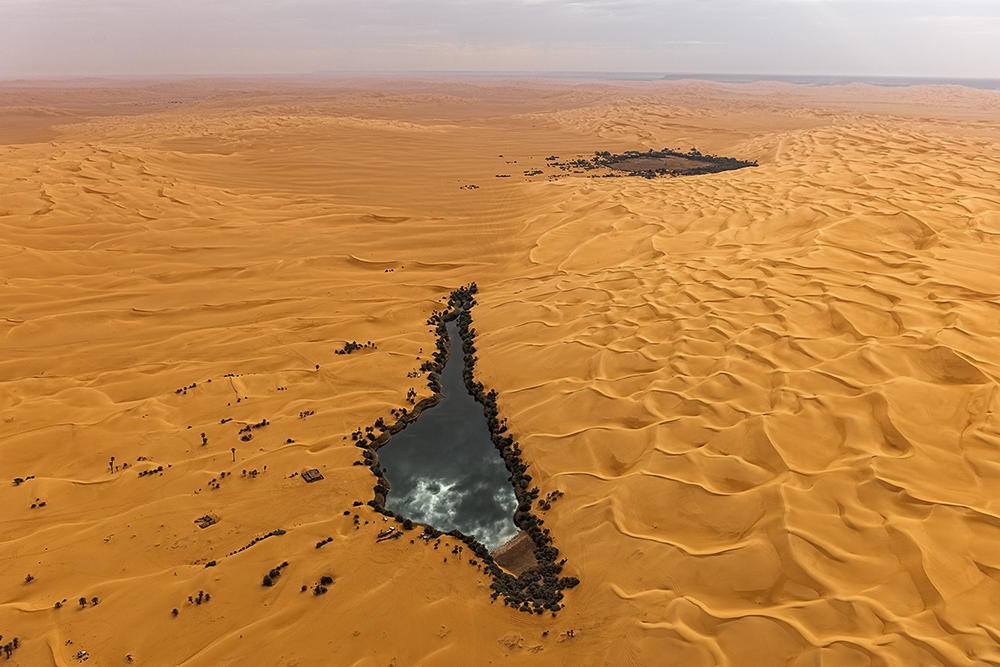
- More than a third of Africa’s territory is covered by the largest desert on our planet, the Sahara. The most famous oasis of this desert is the Guelta d’Archei, which was formed around a lake with the same name, which translates as “clear water”. However, nowadays the water is not so clean and has an unpleasant smell. Underground springs replenish the level of lake water, which contains a lot of algae, which is food for numerous frogs and fish. Nile crocodiles can be found here.
- The 77,000 km2 Tafilalet region in southern Morocco is home to the largest oasis in the world. This group of oases, located in the lower valleys of the Wadi Ziz and Gueris rivers, extends to the cities of Erfoud and Rissani.
- The Timia Oasis is located in Niger at the foot of the Lepekha Mountains. The inhabitants are engaged in the cultivation of date palms, pomegranate and orange trees. Many migratory birds spend the winter here, and nomadic herds of elephants and giraffes can be found.
- The oasis with salt lakes, Umm al-Ma’a, which means “mother of water” in Arabic, occupies the Libyan part of the Sahara.
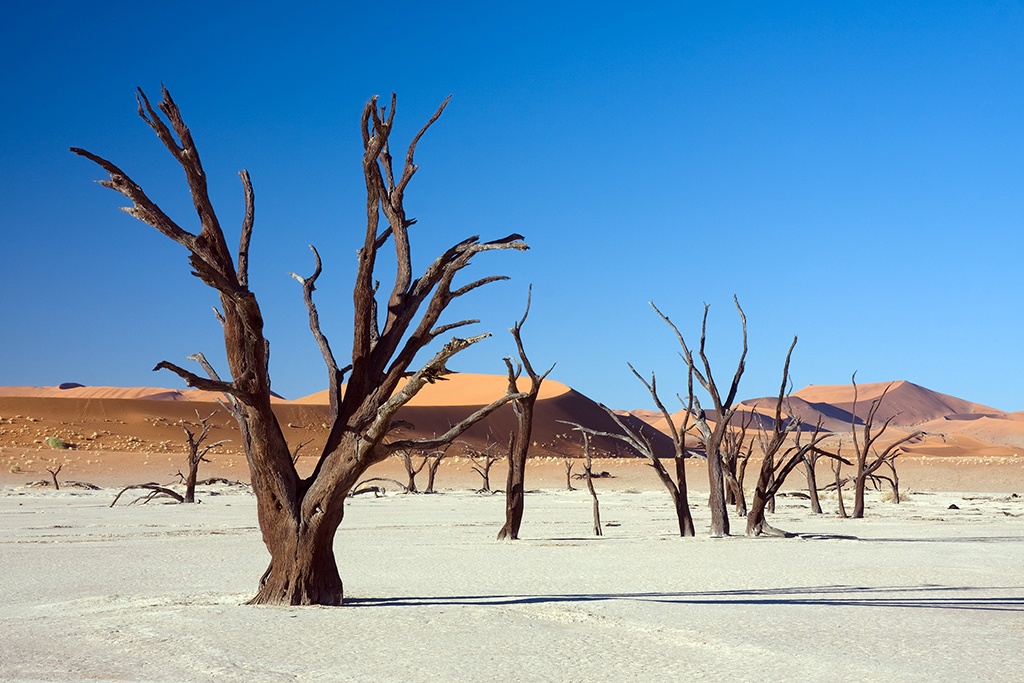
- The oasis is called the “Dead Forest”. Once upon a time, there was an amazing oasis in the middle of the Namib Desert along the west coast of Africa. But over time, the sun ruthlessly destroyed all the greenery – the trees were literally scorched, and the dry wind dried the trunks, preventing them from rotting. It is because of the presence of dried trees, which are more than 900 years old, that the place got its name. The dead realm of trees resembles alien landscapes.
Oases of Asia
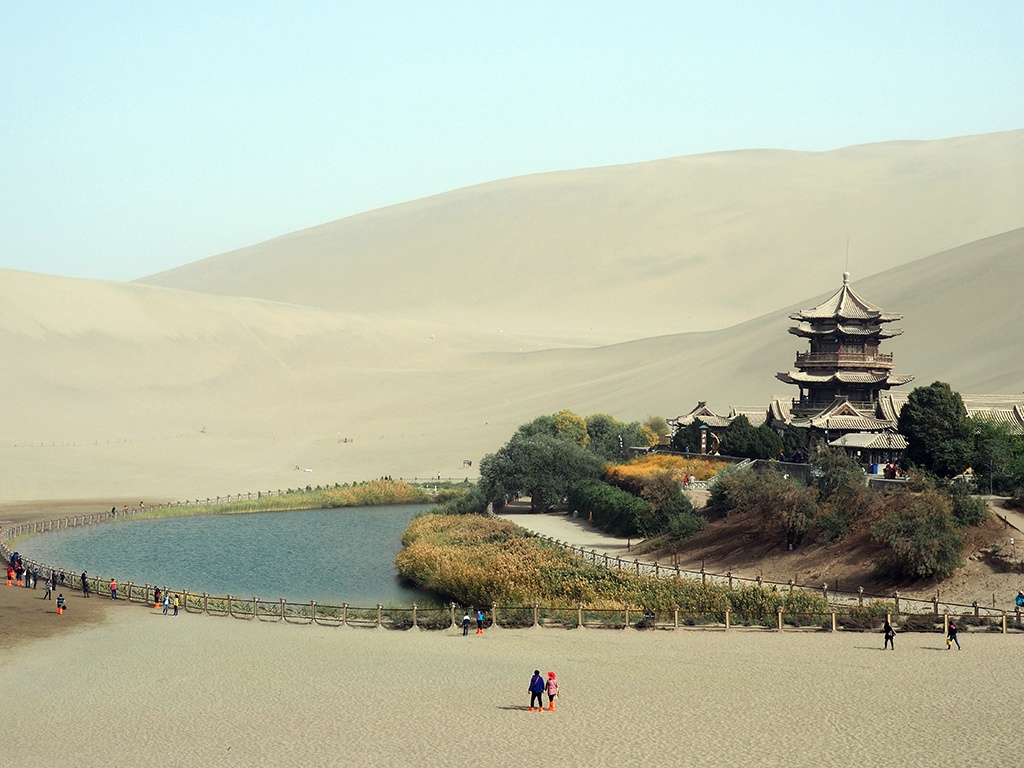
- In the Gobi Desert, in the Dunhuang Oasis, there is Lake Yuzhiquan, which means “New Moon” in Chinese. The name comes from the shape of the lake, which is surrounded by greenery and houses and a Buddhist temple.
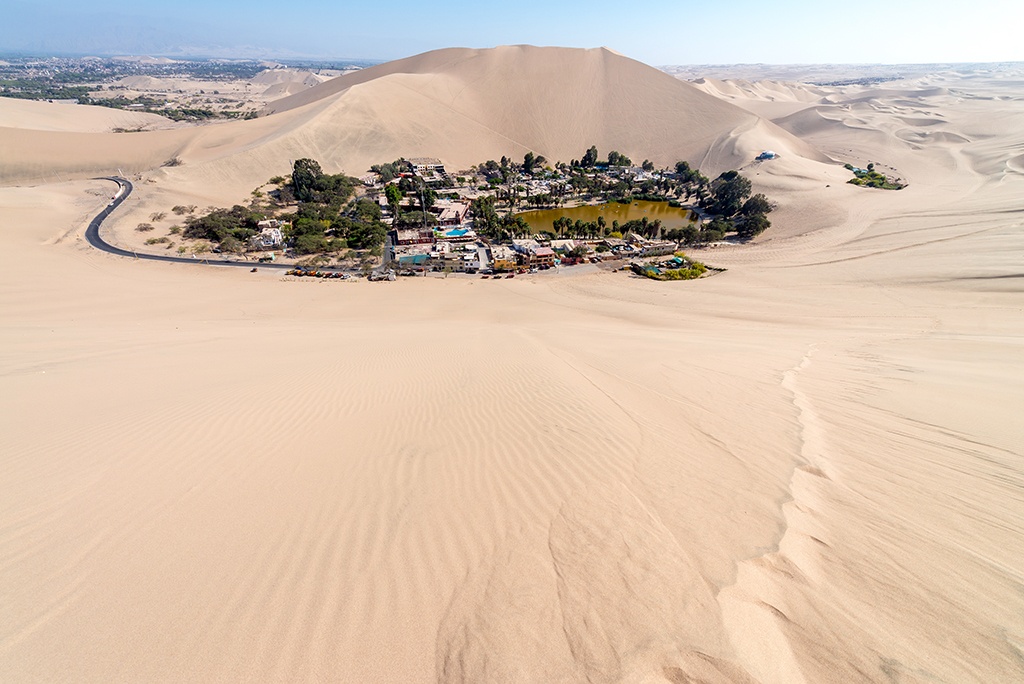
- The Huacachina Oasis, located in southwestern Peru, was built around a natural lake with many palm trees on its shores. According to legend, there was an imprisoned Indian princess who, during her escape, entered the reservoir, which then turned into a lake, and dunes appeared from the girl’s mantle to protect it from sandstorms. The locals believe that the princess turned into a water maiden and has not left the lake.
Why oases are rarely found
Oases are very rare phenomena in nature, hard to find and sometimes difficult to reach. Unfortunately, the number of oases has been decreasing recently, due to global warming and human activity that is harmful to the planet and destructive.