



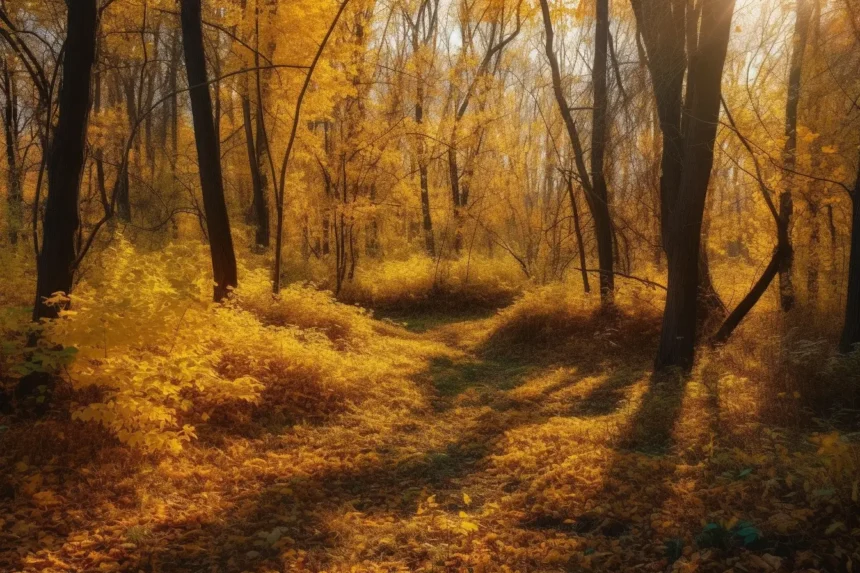
Everyone knows that every year in autumn the leaves put on a colourful show by changing colour, but not everyone knows why this happens.
Why do leaves change colour in autumn?
One of the most fascinating things about autumn is the opportunity to watch the usual green leaves on the trees turn into blazing reds, yellows and oranges. If you live in temperate latitudes with a mild climate, this is a familiar sight.
The colour change is due to the pigmentation of the leaves. The pigment that gives leaves their familiar green colour is called chlorophyll, and it helps photosynthesis to take place.
Photosynthesis is a complex process of synthesising organic compounds from carbon dioxide and water using light energy, involving photosynthetic pigments and the release of oxygen. In addition to chlorophyll, leaves contain many other pigments that perform the same function. These include orange carotenoids and yellow xanthophylls, whose concentration is much lower, so the relatively abundant green chlorophyll molecules successfully mask them. But this disguise does not last forever.
With the onset of autumn, the chlorophyll in the leaves begins to break down, the green colour fades, and it is finally possible to see orange and yellow leaves.
Interesting things happen inside the leaves too. In addition to the yellow and orange pigments that are always present, the leaves also contain some other pigments that only appear in autumn. These are called anthocyanins, and they help plants extract nutrients from the leaves. This process takes place in late autumn, before the leaves are about to fall from the tree. Anthocyanins are often red and sometimes even purple in colour. With their appearance comes the final stage of the wonderful autumnal transformation that we enjoy watching.