


The history of vehicle-based speed competitions dates back to ancient Greece, long before the advent of gladiatorial combat.
In 680 BC, popular quadriga races (chariots drawn by four horses) were included in the Olympic Games programme. Interestingly, because of the danger of such races for the driver, the owners of the chariots did not drive the horses themselves, but the owner of the chariot was declared the winner, which raised his status and confirmed his financial solvency in the eyes of others.
Naturally, with the advent of the automobile, the question: “Who is faster?” has not lost its relevance.
When the first car races were held
On an early Manchester morning in 1867, two steam-powered carriages had to race each other over a distance of 8 miles. This event violated all the laws on driving self-propelled vehicles that existed at the time, so it was not widely publicised. Nevertheless, the race was launched.
On 19 December 1893, the Parisian newspaper Le Petit Lournal published an announcement of the first “horseless carriage” race. The start was scheduled for 22 July 1894.
Out of 102 participants who applied, only 21 crews were admitted to the competition. The rest of them failed at the incoming technical inspection and preliminary testing stages.
Of the vehicles equipped with petrol engines, all fourteen Peugeots and Panard-Levator completed the 126 km Paris-Rouen route. Only three of the seven steam engines finished the race. The first place was shared by two participants: “Peugeot and Panard-Levastore, and the steam-powered car set the speed record, reaching 22 km/h.
A little later, similar competitions were successfully held in Germany, Italy, the USA and the UK.
Car speed records at the dawn of the automotive industry
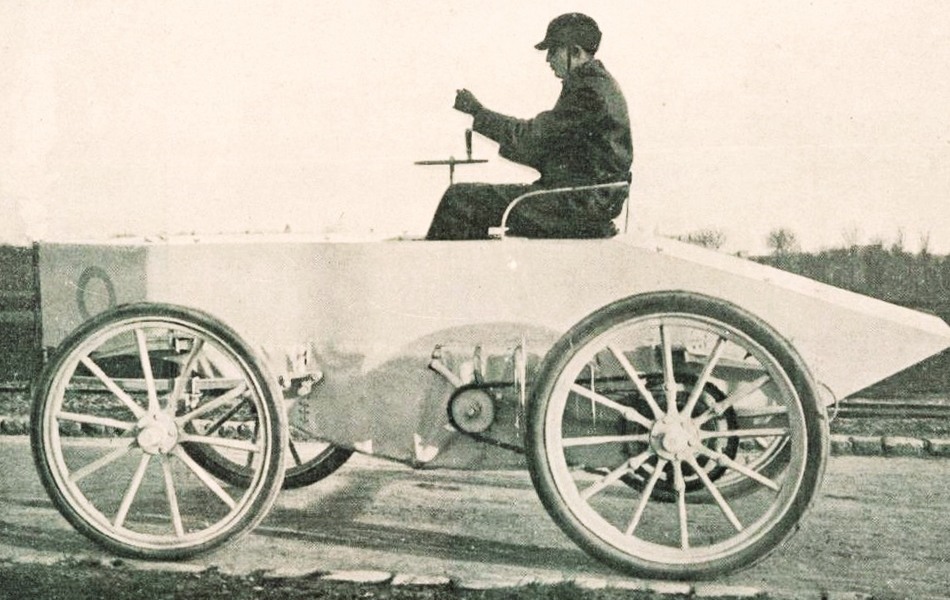
At the end of 1898, Count Gaston de Chasselot-Loba reached 63 km/h on his electrically powered “iron horse”. This event is considered the first officially documented speed record.
Soon after, Belgian Camille Genatzi, also driving an electric car, accelerates to 66 km/h.
The gambling duel continues with varying success until 1899. Zhenatzi emerges victorious with a result of 105.8 km/h. Even the accident that resulted in Kamil losing his arm did not stop his thirst for victory.
Henry Ford also “dabbled” in racing, but he did not need sports fame, his main goal was advertising. In 1904, he accelerated his creation to 147 km/h. Europe did not accept the record, citing a violation of club rules, but in America this event was appreciated.
In 1911, a 200-horsepower Blitzen Benz driven by American Bob Berman reached 228 km/h. Conservative officials, referring to the fact that the distance travelled at this speed was recorded in only one unit of measurement (Europe measured in kilometres, America in miles), did not immediately recognise the record as official.
Henry Seagrave broke the 300 km/h mark in his Sunbeam 1000hp in 1927 with a result of 327.89 km/h.
“Malcolm Campbell’s Bluebird reaches over 400 km/h in 1932, continuing to improve its results.
The 500 km/h limit was surrendered to John Aston in a three-wheeled Rolls-Royce Aston that looked more like an aeroplane than a car.
Modern speed records
In the middle of the last century, the development of racing cars received a new impetus – they were fitted with aircraft and rocket engines.
In 1954, aircraft designer Alexei Smolin presented the GAZ turbojet Arrow with a MiG-17 jet turbine, with a design speed of 800 km/h. However, during tests at the Gorky airfield, the car only managed 300, and the race ended in disaster.
On 5 September 1963, at the Bonneville Salt Flats, the Spirit of America, piloted by Craig Breedlove, set the first record for a jet-powered land vehicle – 657.114 km/h. However, according to the rules in force at the time, a three-wheeled carriage, with such a propulsion system, could not be considered a car, so the FIA did not recognise the record. But the motorcycling movement was not at a loss: by recognising the Spirit of America as a “sidecar motorcycle”, the FIM Federation became the owner of the absolute speed record.
On 17 July 1964, Donald Campbell set the official speed record for a car with a four-wheeled Bluebird-Proteus CN7 without jet propulsion – 648.782 km/h.
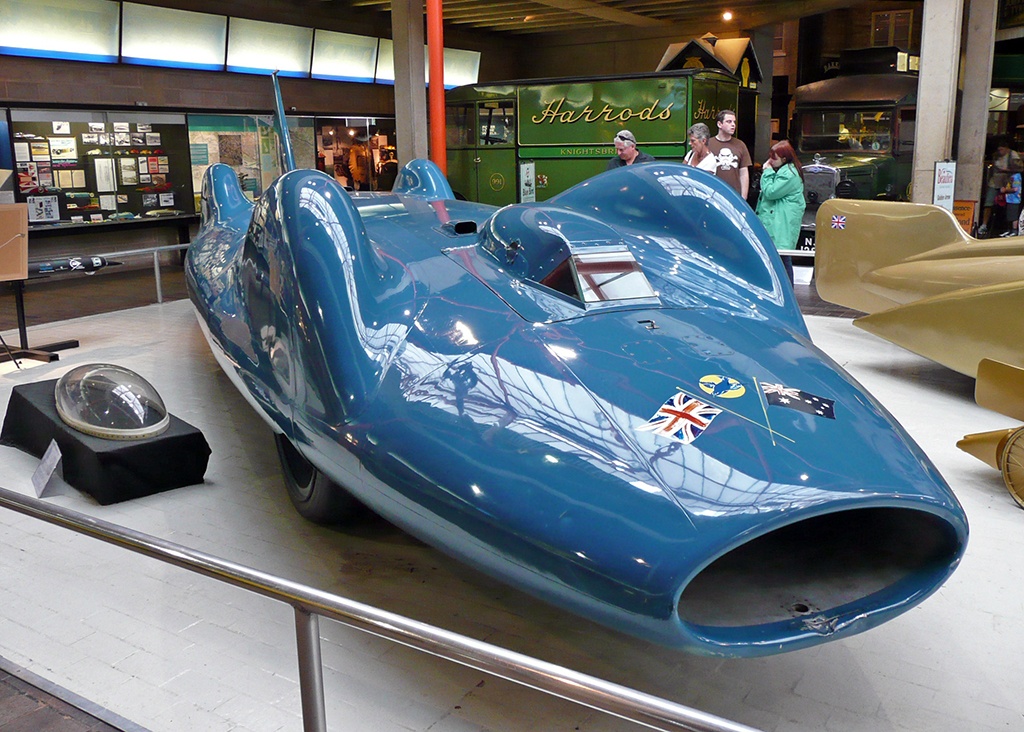
Following the Brilav precedent, the FIA urgently approves jet cars, and on 7 October 1964, the Wingfoot Express (piloted by Tom Green) sets a new record of 668.027 km/h. But two days later, “The Green Monster” driven by Ert Erfons reaches 699.01 km/h.
In the FIA-adapted Spirit of America-Sonic 1 (four-wheel drive) Craig Breedlove enters the battle for speed – on 13 October 1964, he sets a record 754.330 km/h. Two days later, after losing both parachutes during braking and flying into an irrigation canal on burnt brake discs, Craig, who miraculously survived, sets a new record of 846.861 km/h.
Then the frantic “pursuit of speed” begins:
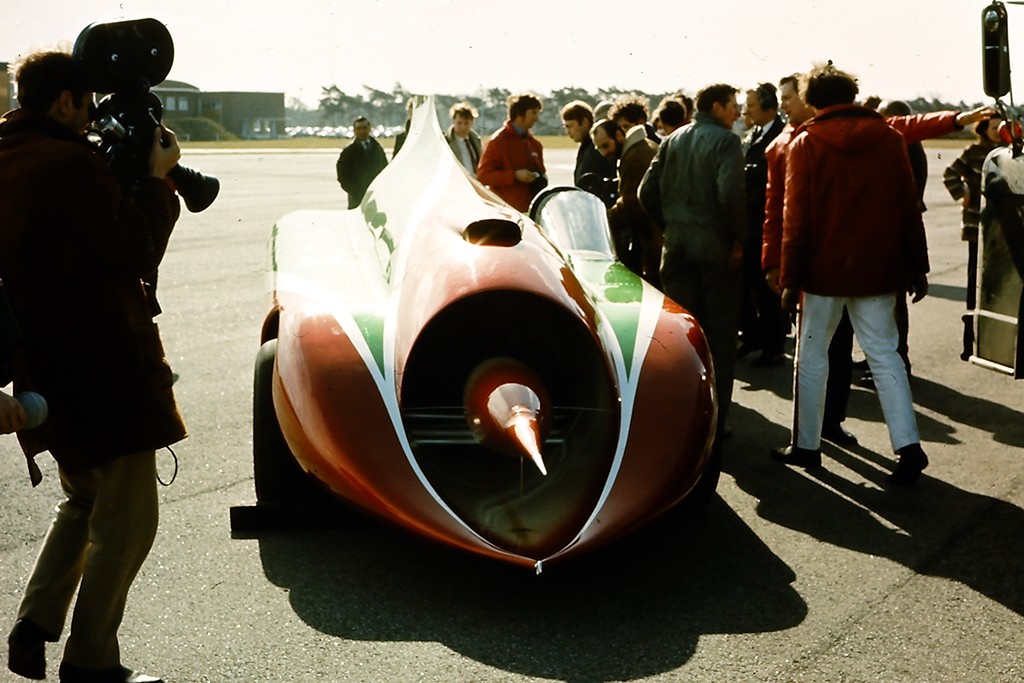
- 27.10.1964 Ert Erfons (“The Green Monster”) – 863.791 km/h;
- 02.11.1965 Craig Breedlove (Spirit of America-Sonic 1) – 893.966 km/h;
- 07.11.1965 Ert Erfons (“The Green Monster”) – 927.872 km/h;
- 15.11.1965 Craig Breedlove (Spirits of America-Sonic 1) – 966.961 km/h.
Furthermore, aircraft turbojet engines proved to be unable to satisfy the considerable appetites of the racers.
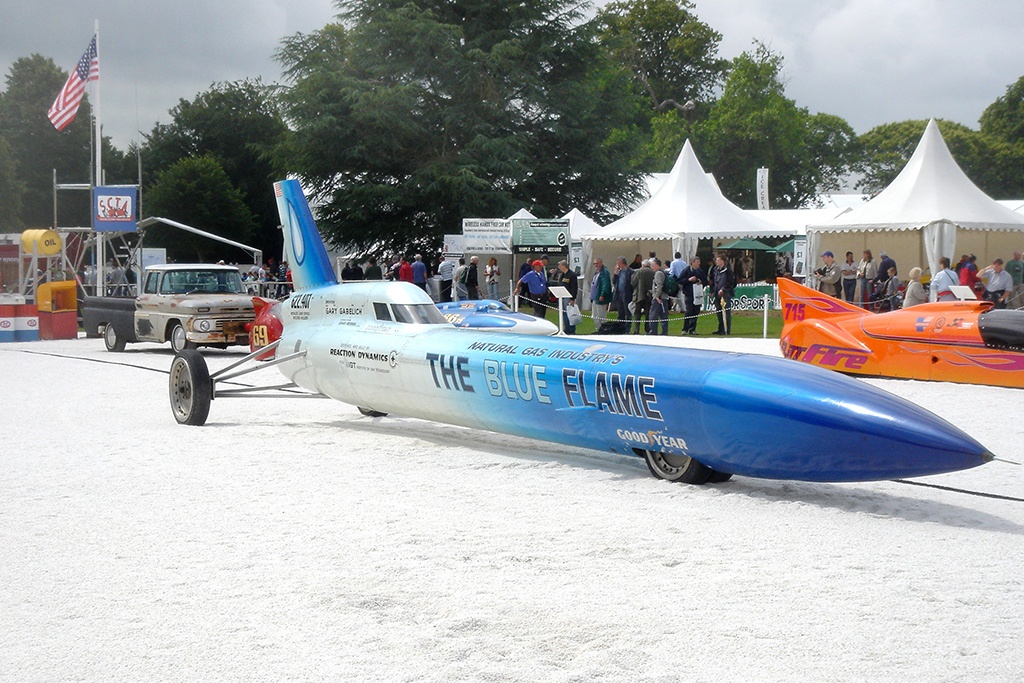
On 23 October 1970, “The Blue Flame”, the first record-breaking car equipped with a rocket engine, entered the arena. Driven by Gary Goebelich, it achieved a speed of 1014.52 km/h. This record stood for a very long time – 13 years.
On 4 October 1983, the Englishman Richard Noble improved this record, but not by much – 1019.47 km/h. However, no one could beat him for 14 years. No one but Noble himself… Having designed the TrustSSC with his team, on 25 September 1997, Noble puts Andy Green behind the wheel, who sets the sixtieth anniversary car speed record of 1149.30 km/h.
It was not without reason that Richard chose the abbreviation “SSC” (supersonic car) in the name of the car.
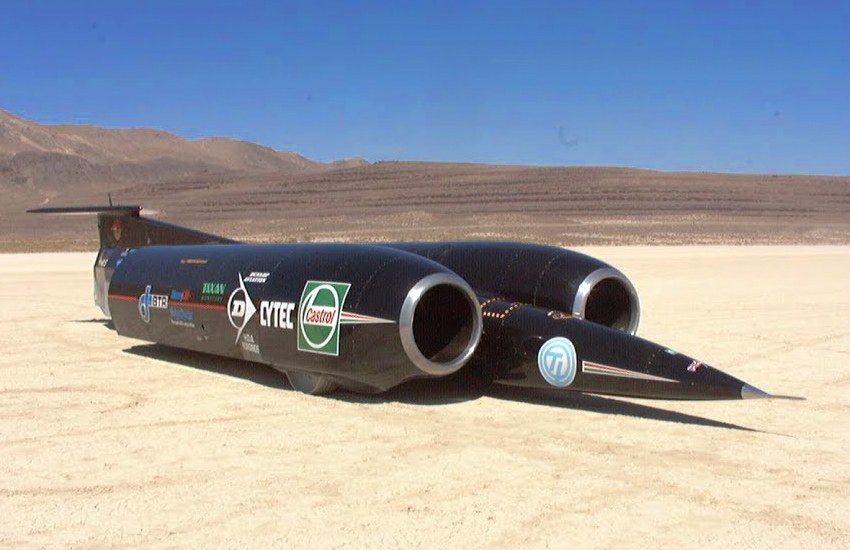
On 15 October 1997, Andy Green in the TrustSSC was the first to go beyond the speed of sound in a car and set a record of 1227.985 km/h, which still stands today.
Speed record for a production car
In order for a car to be considered a “serial production”, it must meet a number of criteria:
- be intended for personal use by consumers;
- be on the market;
- have the equipment declared by the manufacturer during registration, without signs of modification and tuning;
- be sold and operated in several countries.
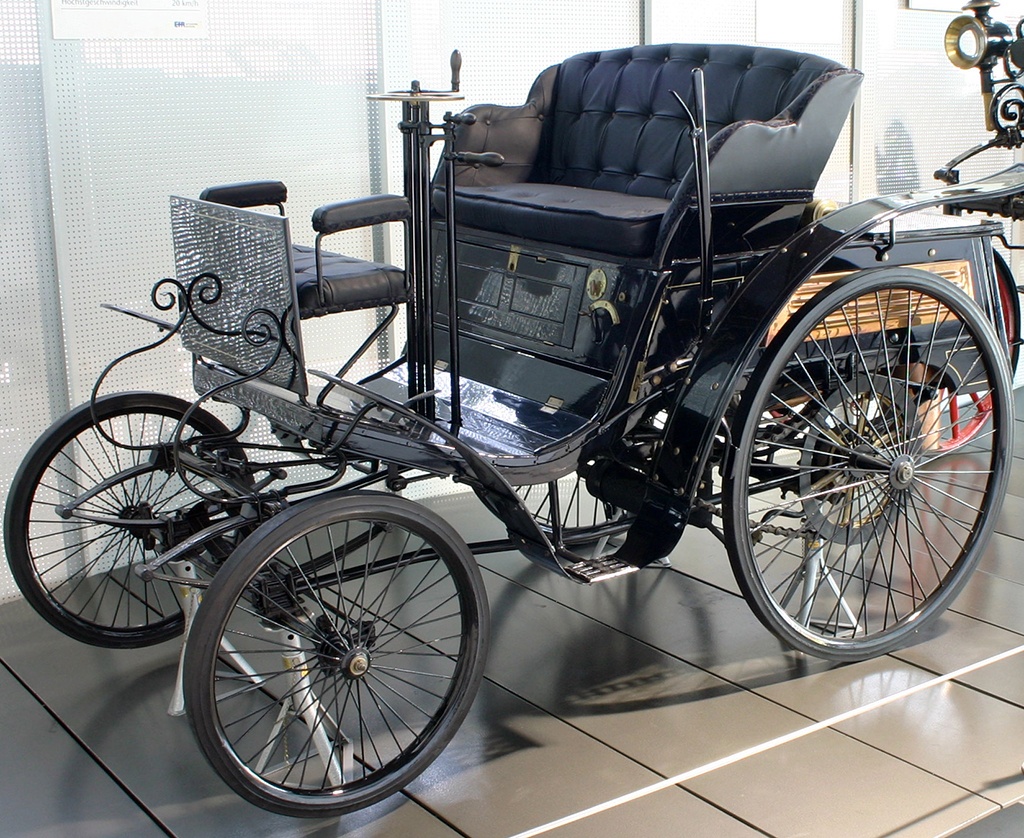
The first speed record in this class was set by the first production car, the Benz Velo, in 1894 with a speed of 20 km/h.
But time does not stand still, and on 10 October 2020, racing driver Oliver Webb reached a record speed for a mass-produced car in the SSC Tuatara. With a maximum speed of 443 km/h declared by the manufacturer, racing pro Oliver accelerates the car weighing 1,247 kg to 484.53 km/h in the first race and 532.93 km/h in the second. The arithmetic mean of 508.73 km/h became the record. However, due to measurement errors, the record was not validated.
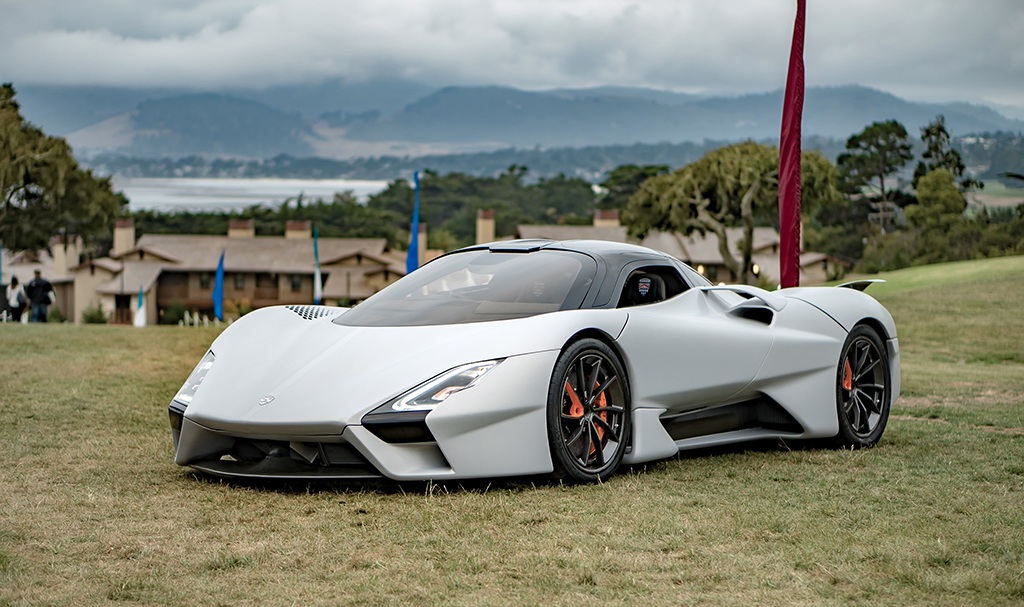
The SSC Tuatara’s second attempt to break its own record ended in failure. The car was driven by the actual owner, so for safety reasons, it was decided to reduce the amount of fuel mixture supplied to the engine, so the tests were held with reduced engine power. As a result, the car was unable to break the 404 km/h mark.
The third approach took place on 14 May 2022. On the runway of the Kennedy Space Center in Florida, equipped with a three-stage measuring system, the SSC Tuatara, driven by pilot Larry Kaplin, reaches 474.8 km/h. This time, there were no obstacles to recording the event in the Guinness Book of Records.
However, SSC engineers do not give up hope of officially breaking the 500 km/h mark, and Tuatara is preparing for a new record.
For reference, the estimated price of the SSC Tuatara supercar with an engine power of 1750 hp and a 0-60 time of 2.3 seconds is about $1.3 million.
The fastest sedan
A sedan is a type of car body in which the engine compartment, interior and trunk are structurally separated from each other.
The title of the world’s fastest sedan belongs to the Bentley Flying Spur Mulliner.
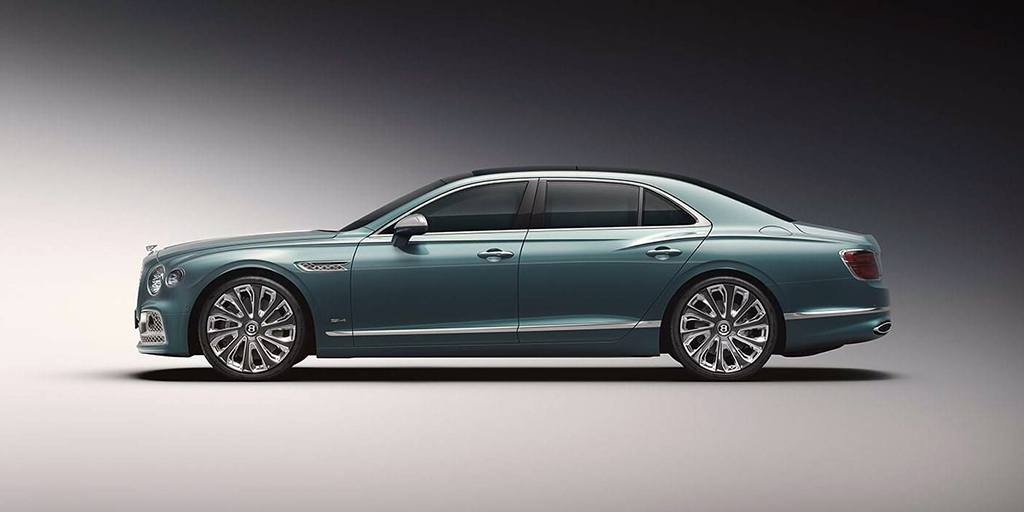
According to experts, this car is not only the fastest, but also the most beautiful and luxurious in its class.
The aristocratic body, created with the use of Superforming technology, is distinguished by the careful consideration of the smallest details. Bentley’s Muliner division, designed to fulfil the wishes of the most demanding customers, remains true to itself: the front panel with veneer and shiny chrome trim, leather interior trim, advanced sound insulation system, adjustable heated seats with massage function create an unforgettable driving experience.
The car is equipped with a six-litre Bently W12 petrol engine producing 635 hp, which accelerates the 2437 kg car to 100 km/h in 3.8 seconds, with a top speed of 333 km/h. The estimated price of the car is $95 thousand.
The fastest roadster
A roadster is one of the subtypes of the convertible body, which is a two-seater car with a convertible top.
According to Motor Trend and Car and Driver, the American Chevrolet Corvette Coupe (C8) Stingray 6.2 V8, which, although declared by the manufacturer to be a coupe, has a modification with a folding hardtop, will take the top spot in this class in 2022.
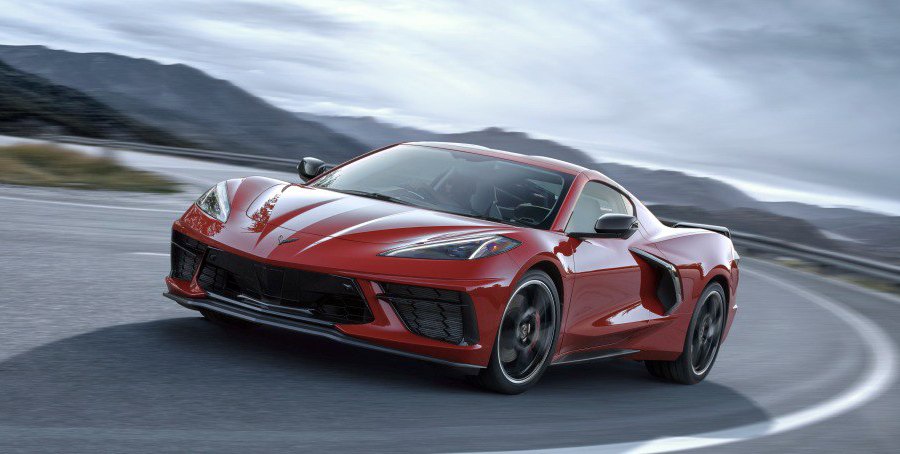
The engine of this sports car is mid-mounted (a 6.2-litre LT2 petrol V8 is used), producing 495 hp, which allows the car to accelerate to 100 km/h in 2.9 seconds with a weight of 1530 kg. A two-zone climate control system, sports seats with three different configurations, and a virtual dashboard that can be adjusted at the driver’s choice provide a sufficient level of comfort in the cabin.
The front lift, a system that raises the front of the sports car when passing speed bumps or steep hills, is present in many models of this class. But only the Chevrolet Corvette Coupe (C8) Stingray 6.2 V8 will perform this operation automatically if you set the appropriate coordinates in the navigator.
The maximum speed of the car is 312 km/h, the estimated price is $197 thousand.
The Tesla Roadster 2, announced for production in 2022, whose prototype is on display in Los Angeles at the Peterson Automotive Museum, should not be overlooked.
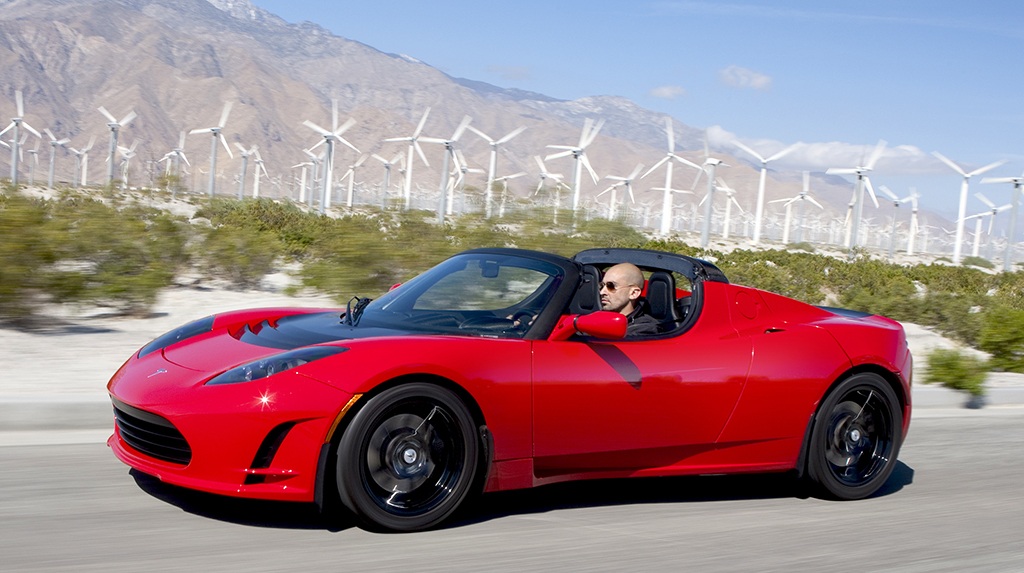
The all-electric supercar, which has excellent aerodynamic qualities, is equipped with three electric motors – two on the rear axle and one on the front axle. The additional installation of ten jet engines running on compressed cooled air (the so-called SpaceX package) will allow the car to accelerate from a standstill to 100 km/h in 1.1 seconds.
Such dynamics can already be compared with Formula 1 cars. The maximum speed of the supercar is expected to be around 400 km/h. The release date of the electric car has not yet been disclosed, but the cost of pre-ordering it is already around $250,000.
The fastest jet-powered car
In 2007, the same Andy Green and his racing colleague Richard Noble embarked on an ambitious project to create a car capable of reaching speeds of over 1609 km/h on the ground. The British company Bloodhound Programme Ltd takes on the project.
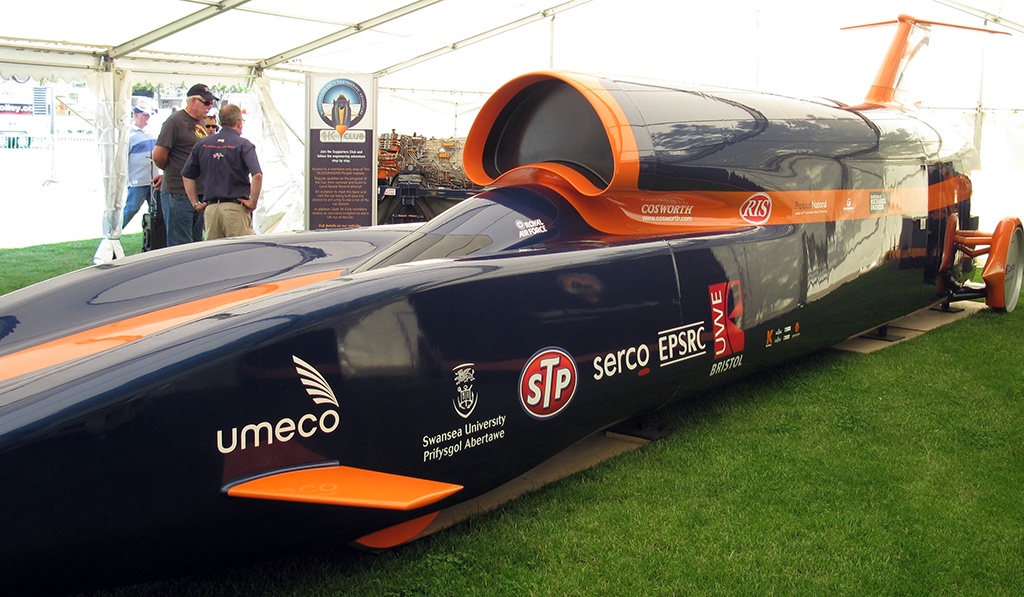
The prototype, called the Bloodhound SSC, was built in 2015. This 3-metre-high monster is 13.5 m long and weighs 7.8 tonnes. In total, the machine is equipped with three engines:
- a jet engine from the Eurofighter Typhoon fighter jet designed to accelerate the car to 320 km/h;
- a hybrid rocket engine, which is switched on in the second stage and brings the speed up to the design level;
- an 800-horsepower internal combustion engine that provides fuel and electricity.
Another highlight of the project is the desire to achieve zero carbon emissions. For this purpose, it is planned to use synthetic fuels based on hydrogen and methanol.
In the autumn of 2019, a modified car called the Bloodhound LSR reached a speed of 1010 km/h during testing.
The supersonic airflow under the car destroyed some of the paint on the body surface and tore off a piece of steel cladding.
Currently, due to financial difficulties, work on the project has been suspended.
TOP-5 speed records of modern cars
- The SSC Tuatara tops the leaderboard, of course, with a record 475 km/h.
- The 1,360-horsepower Swedish Koenigsegg Agera RS is a close second at 447 km/h.
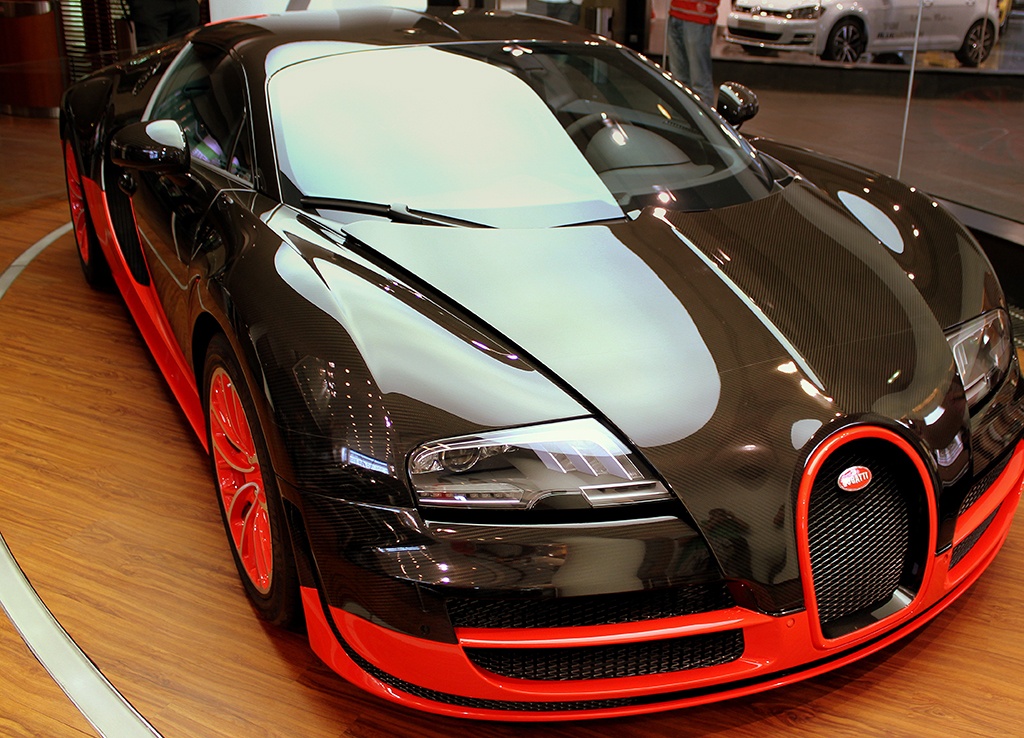
- Next is the small-scale, custom-built Bugatti Veyron 16.4 Super Sport, with a top speed of 431 km/h. It should be noted that the car is necessarily equipped with a speed limiter for customers, if we consider the limit to be 415 km/h.
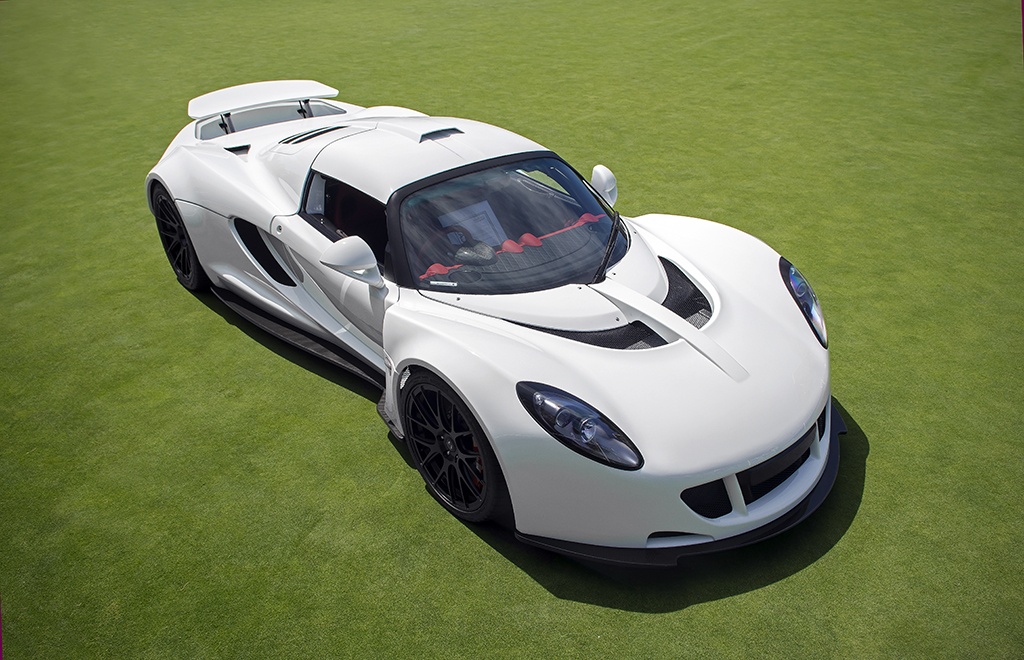
- The obscenely expensive British Hennessey Venom GT has a top speed of 428 km/h. By the way, according to some reports, as of 2022, only 13 units have been produced.
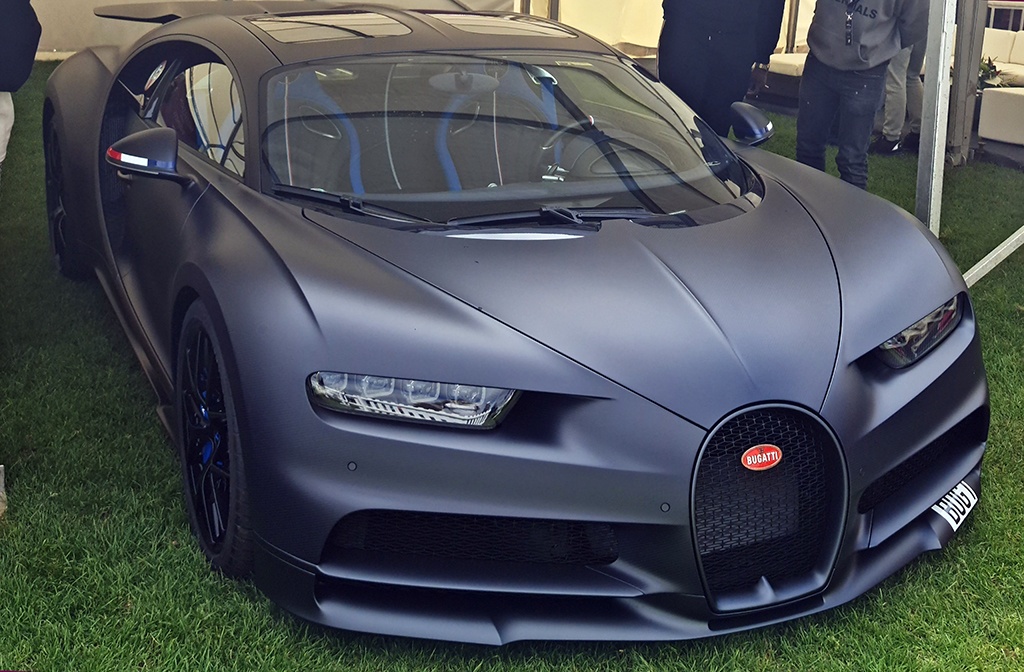
- The Bugatti Chiron Sport rounds out the top five with 420 km/h. The speed limit is set at the same level, but manufacturers claim that the car is capable of more. There is no direct evidence of this yet.