


28 December 1895 is an outstanding day in the history of mankind. This day is considered the birthday of cinema.
What is silent cinema?
“Silent cinema” was the name given to cinema at the beginning of its emergence, when all films released on the screen were silent. From the time of the birth of cinema until the advent of sound cinema, silent films remained the only type of film.
The history of silent cinema
Edward Muybridge was a painter and photographer by profession, and was the first in the world to use several cameras simultaneously. In 1878, he was able to capture the jumping of a horse named Ocident. Later, he created the zoopraxiscope, a device for projecting moving pictures that existed before the advent of celluloid film. His next invention was a camera with photographic plates on a rotating drum.
In 1884, the American inventor George Eastman replaced photographic plates with paper film with a layer of photo emulsion pre-coated on it.
The French inventor Louis Le Prince created the world’s first chronophotographic camera with a single lens and flexible roll media for recording images. In 1888, he made the first film on film, titled Scene in the Rowanlgay Garden.
The era of silent films
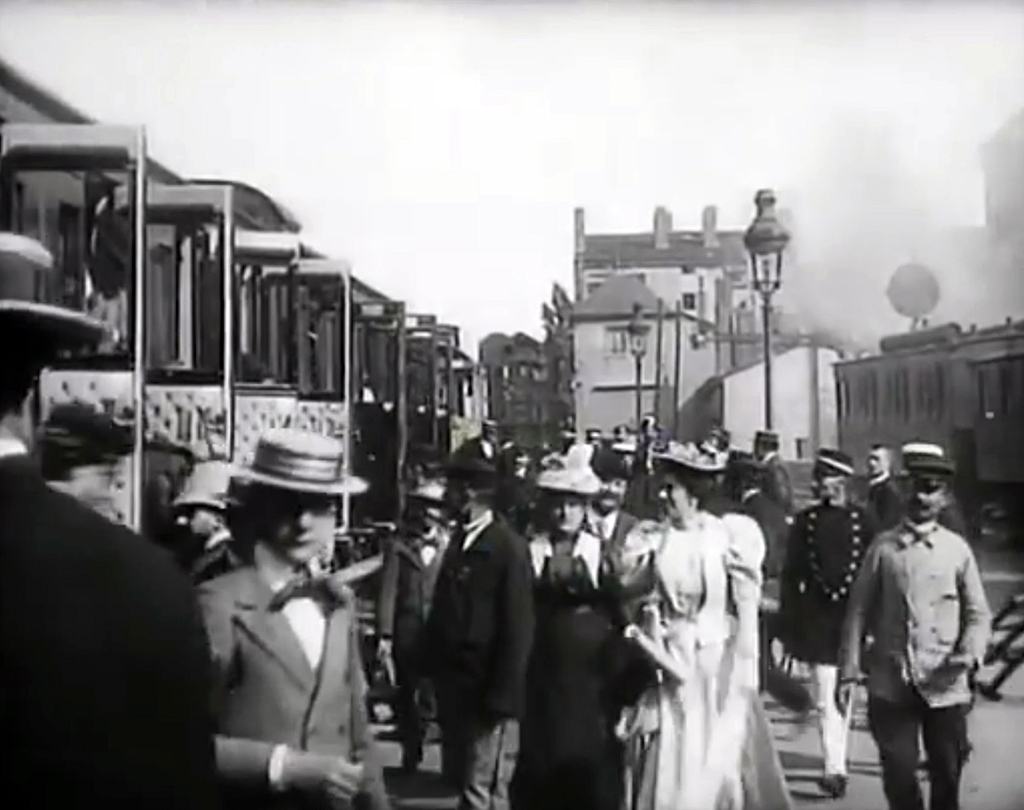
The development of French cinema is inextricably linked to the name of the Lumière brothers. On 13 February 1895, they received a patent for both shooting films and showing them, which was first held at the end of December 1895 at the Grand Cafe on Boulevard des Capucines. Ten films were shown during a twenty-minute screening.
In the United States, Thomas Edison’s studio has been successfully shooting films since 1889, most of which were directed by William Dixon. After some time, silent films began to be released with titles or intertitles, which were text inserts that explained the plot and reproduced the lines of the characters on screen. At the initial stage, films were distributed without intertitles; the distributor received a text with titles, which he had to print and insert at his own discretion. With the beginning of the new century, titling workshops appeared, whose duties included the production of montage fragments with intertitles. Over time, titles became an integral part of films.
Film screenings were accompanied by piano playing. Such a musician was called a taper.
The French film studio “Gaumont”, which was created in 1895 by the inventor engineer Leon Gaumont, began to create sound films in the early twentieth century. The process of synchronising image and sound was solved by combining a film projector with a phonograph and then a gramophone within the same axis. Charles Urban was moving in the same direction. The complexity of the devices created was an obstacle to their successful application.
Soundtracking became widespread in the second half of the twenties. The first sound film to be released in 1927 was called The Jazz Singer. Filming of silent films continued until 1929, when sound films became more popular.
The plot of the silent film
The first silent films had a simple plot. This is the case with the film The Workers’ Exit from the Lumière Brothers’ Factory in Lyon, which depicts several hundred workers, a dog, a horse and one person on a bicycle leaving the factory gates.
In the comedy The Watered Waterer, a little boy was playing and accidentally put his foot on a hose, which poured water on a waterer.
The first film to use special effects was Breaking Down the Wall. In this film, the footage is scrolled backwards and the destroyed wall seems to be rebuilding itself.
The first full-length horror film, The Cabinet of Dr Caligari, was made in 1920 by Robert Wiener. It tells the story of Dr Caligari’s cruel experiments.
Outstanding silent film actors
Thanks to silent cinema, the world learned about such outstanding actors as:
- Sarah Bernhardt is a French actress.
- Sir Charles Spencer Chaplin – American and English film actor, screenwriter, composer and director.
- Natalia Lysenko is a Ukrainian and French actress.
- Loyal Underwood is an American film actor.
- Stanley “Tiny” Sandford – American actor.
- Alma Bennett – American actress.
- Moritz Stiller – Swedish actor, screenwriter and director.
- Eric Campbell – British actor-comedian.
- Vera Vasilievna Kholodnaya is a Russian actress.
- Alan Garcia is an American actor.
Silent cinema and Charlie Chaplin
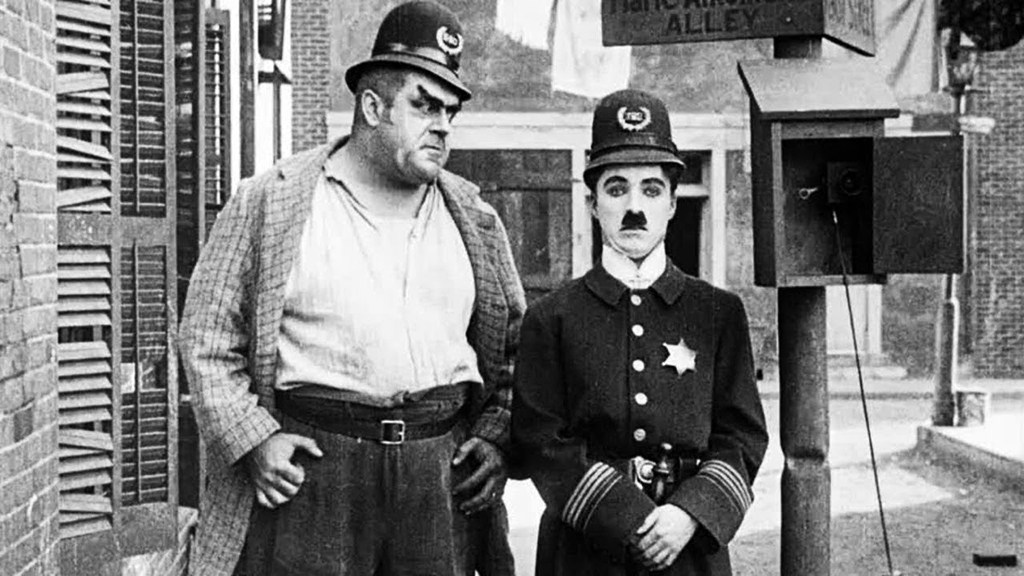
Sir Charles Spencer Chaplin is considered a universal master of cinema. He created the unsurpassed image of the tramp Charlie, which the audience remembered from his films:
- “Children’s Car Races”;
- “The Extraordinary Plight of Mabel”;
- “City Lights”;
- “The Tramp”;
- “New Times”;
- “The Kid”;
- “The Usurer’s Shop”;
- “Gold Rush”:
- “The Circus”;
- “Caught in the Rain”.
In the tenth years of the twentieth century, Charlie Chaplin worked at the Keystone Film Studio as an actor. In April 1914. Chaplin began to try himself as a director and screenwriter of most of the films he starred in, in 1916 he began to produce films, and in 1918 he began to write music. In 1919, he co-founded the United Artists studio with Mary Pickford, Douglas Fairbanks and David Griffith. In the silent film era, Charlie Chaplin was considered one of the most creative and influential people. His creative life was influenced by the French comedian and film actor Max Linder, to whom he later dedicated one of his films
5 reasons to watch a silent film
Nowadays, there are many well-known film companies that create interesting films for us, with different plots and special effects, but silent films are classics of cinema and that’s why they are worth watching:
- Silent cinema provides an opportunity to get to know the history of cinema better.
- The unsurpassed acting makes it possible to understand the plot without words.
- It has an interesting plot.
- Cinema without words conveys the atmosphere and flavour of the early twentieth century.
- Silent cinema teaches you to feel, observe and notice the smallest details.
A selection of silent films worth watching
Today, more than 25% of silent films created in the early days of cinema have survived. With the advent of sound films, distributors found it unnecessary to keep silent films, so most of them were disposed of. Silent films are intended for family viewing: they are simple and understandable without words, and the captioned screensavers that explain the story are interesting to read aloud and discuss; moreover, silent films are incredibly sincere – they are both funny and touching.
Here is a list of 10 silent films worth watching:
- “Lights of the Big City”, 1931. A lyrical comedy.
- “Safety First!”, 1923. A comedy.
- “A Trip to the Moon”, 1902. A film parody of Jules Verne and H.G. Wells’ novels.
- “Faust”, 1926. A drama.
- “A Page of Madness”, 1926. A drama.
- “Nosferatu. Symphony of Terror”, 1922. Horror film.
- “Sunrise”, 1927. Crime, melodrama.
- “Metropolis”, 1927 Science fiction, thriller.
- “New Time”, 1936. Drama, comedy.
- “The Cabinet of Dr Caligari”, 1920. Detective, thriller.
Interesting facts about silent cinema

Finally, we have prepared some interesting facts about silent cinema:
- The word “cinema” came from Germany.
- 80% of American silent films have been irretrievably lost (due to fires or lack of space in the city to store the films).
- During Chaplin’s popularity in America, a competition called the Chapliniad was often held for the best imitation of the actor. Charlie Chaplin once decided to take part in one of these competitions incognito, but lost.
- 342 takes (the largest number) were made during the shooting of a small episode in the film City Lights.
- Chaplin successfully performed the professional duties of eight people in the film Rampage Lights:
- producer;
- screenwriter
- director
- composer
- choreographer
- editor
- costume designer;
- lead actor.